Author Archives: RoseLyon

Unknown's avatar

About RoseLyon

Rose Lyon is a highly regarded American occultist, psychic and healer residing in Sacramento. She began formal study of the occult in her twenties as a regular visitor to a local curiosity shop. She befriended a local Wiccan priestess who taught her astrology, magic and tarot. This led to her formal initiation into the Craft in 1988. She continued her studies by joining the Clairvoyant training program at Psychic Horizons, graduating as a reverend in 1993. With a hunger for art and history she enrolled at SFSU in the theater program where her training exposed her to the ancient connections between shamanism and theater. Majoring in Drama with an emphasis in World Religions, she studied the history of Greek and European theater as well as Women's Studies. She graduated with a BA in Drama & Performance in 1997. Since then she has expanded her occult knowledge through studies of Irish folklore, Chinese astrology, herbal healing and Feng Shui. She is an adept healer and psychic, and continues her practice of tarot readings, psychic healings and marriage ceremonies while studying Ceremonial Magick and Qabalah with the Temple of the Silver Star.

Fatherless Daughters: How Growing Up Without a Dad Affects Women

father-and-daughter-silhouette-494x329

“People who lose their parents early in life are like fellow war veterans. As soon as they discover that they are talking to someone else who has lost a parent, they know they are speaking the same language without uttering a word.” – Pamela Thomas

“Fatherless Daughter Syndrome” (colloquially known as “daddy issues”) is an emotional disorder that stems from issues with trust and lack of self esteem that leads to a cycle of repeated dysfunctional decisions in relationships with men. It can last a woman’s entire lifetime if the symptoms go unacknowledged and ignored.”

“Growing Up Without a Dad Shapes Who You Are” by McKenna Meyers

“It took six decades, but I can finally utter a huge truth that caused me tremendous shame and sadness: My father didn’t love me. I never spoke that deep, dark secret, but it was always festering inside of me. It manifested itself in many ways throughout my life as I struggled with a food obsession, low self-esteem, social anxiety, and depression.
Whether a dad was present but rejecting like mine or walked away from his fatherly duties entirely, his absence leaves an indelible mark on a daughter’s psyche as she grows into adulthood.

Below, you’ll find six ways a daughter may be affected by an uninvolved dad.

1. Fatherless Daughters Have Self-Esteem Issues

According to Deborah Moskovitch, an author and divorce consultant, kids often blame themselves when dad leaves the home and becomes less involved in their lives. When they aren’t given an explanation about why dad left, they make up their own scenario and jump to the conclusion that it’s their fault and that they’re unlovable.
This is especially true for daughters. Countless studies have shown that fatherlessness has an extremely negative impact on daughters’ self esteem. Her confidence in her own abilities and value as a human being can be greatly diminished if her father isn’t there. Academically, personally, professionally, physically, socially, and romantically, a woman’s self esteem is diminished in every setting if she did not form a healthy relationship with her father

2. Daughters With Absent Fathers Struggle to Build and Maintain Relationships

According to Pamela Thomas, author of Fatherless Daughters (a book that examines how women cope with the loss of a father via death or divorce), women who grew up with absent dads find it difficult to form lasting relationships. Because they were scarred by their dad’s rejection of them, they don’t want to risk getting hurt again. Consciously or unconsciously, they avoid getting close to people. They may form superficial relationships in which they reveal little of themselves and put very little effort into getting to know others. They may become promiscuous as a way of getting male attention without becoming too emotionally involved.
Ever since childhood, I’ve built walls around myself. I didn’t open up to people. I didn’t ask questions about their families, jobs, or hobbies. I kept my life private, and I remained socially isolated. These were all self-protective measures so I wouldn’t experience rejection like I did with my dad. Knowing this intellectually did nothing to help me change my behavior because my fear of rejection was more powerful than my desire to make connections.

3. Women With Absent Fathers Are More Likely to Have Eating Disorders

In their book The Parent’s Guide to Eating Disorders, the authors Marcia Herrin and Nancy Matsumoto write eloquently about the fact that girls with physically or emotionally absent fathers are at greater risk of developing eating disorders. Anorexia nervosa, bulimia, binge-eating, body dysmorphia, unhealthy preoccupations with food or body weight, and other eating disorders are all more likely if a girl does not have a father figure as she’s growing up. Daughters without dads are also twice as likely to be obese. Because her longing to have a close relationship with her dad is denied, she may develop what Margo Maine (author of Father Hunger: Fathers, Daughters, & Food) calls “father hunger,” a deep emptiness and a profound insecurity. Daughters are left wondering: What’s so wrong with me that my own father doesn’t love me? If I looked different—if I was thin—would I earn daddy’s love?
I’ve struggled with “father hunger” throughout my life—stuffing my face to fill the void, dieting to get model-thin, and always obsessing about food. My days have been filled with thoughts of eating—either doing it or struggling mightily not to. When I accepted that my dad didn’t love me and that he was an unhappy man with deep-rooted problems, I finally started eating normally and began maintaining a healthy weight. I began treating myself in a loving way by exercising, gardening, reading, walking in the woods, and spending time with family. For the first time in my life, I only thought about food when I was truly hungry. This freed me to enjoy my life in so many wonderful ways.

4. Daughters of Absent Fathers Are More Prone to Depression

Not surprisingly, girls who grew up with dads who were emotionally or physically absent are more likely to struggle with depression as adults. Because they fear abandonment and rejection, these women often isolate themselves emotionally. They avoid healthy romantic relationships because they don’t feel deserving and fear getting hurt, but they might jump into unhealthy relationships that ultimately lead to heartbreak. In either scenario, the women are in emotional peril and frequently become depressed. If they don’t deal with the cause of their sadness—an absent dad—they may never be able to develop healthy relationships with men.
To top it all off, data suggests that children without fathers are more than twice as likely to commit suicide.
According to Denna Babul and Karin Louise, authors of The Fatherless Daughter Project, it’s helpful to simply realize that we’re not alone. In fact, one in three women see themselves as fatherless and struggle with feelings of abandonment. Knowing this fact helps us see that there’s a whole sisterhood out there who share a common pain and a need to connect. When we open up and share our journey, we help both ourselves and each other. Whether we feel the loss of a dad through death, divorce, drug addiction, estrangement, or emotional neglect, we must grieve in order to move forward. Read Five Steps to Heal Her Pain: How a Fatherless Daughter Can Move On From Her Dad’s Rejection for ideas on how to avoid falling into depression. A gifted therapist can be key to helping us do just that and becoming happier people.

5. Dadless Daughters Are More Likely to Become Sexually Active Earlier

Studies have shown the many benefits that come from a strong father-daughter bond. Most notably, girls who are close to their dads are less likely to get pregnant as teens. They delay engaging in sexual relationships, wait longer to get married and have children, and when they do find a husband, their marriages are more emotionally satisfying, stable, and long-lasting.
Countless studies also show that women who have unstable or absent paternal relationships are more likely to start having sex earlier and engage risky sexual behaviors. Daughters are four times more likely to get pregnant as a teen if dad isn’t in the picture. Studies show that more than 70% of unplanned teenage pregnancies occur in homes where there is no father.

6. Abandoned Daughters Are Susceptible to Addiction

As with depression, eating disorders, and low self esteem, the absence of a father can trap a daughter in a negative repetitive pattern she can’t easily break out of and turn to drugs to self-medicate and help numb the pain. She is more likely to find herself trapped in a cycle of substance abuse, for example. According to the U.S. Department of Health and Human Services, fatherless children are at a dramatically greater risk of drug and alcohol abuse. Not only are kids in father-absent households about four times more likely to be poor (which can trigger many negative cycles), fatherless adolescents were found to be 69% more likely to use drugs and 76% more likely to commit crimes.

Can a Daughter Survive Without a Father?

Try as I might, I was never been able to get any traction, always making a mess of this or that and never able to form long-lasting friendships. I rejected happiness because I never felt worthy of it. I did so much to sabotage my life and make myself miserable.
Then last year my older sister revealed to me that she, too, had felt unloved by him. I immediately felt enormous relief and then great euphoria. I realized it had never been about me—that I was bad, ugly, stupid and undeserving. It had always been about him—his unhappy childhood, his cold mother, his negative nature, and his dissatisfaction with being a husband and father. It had never been about me…never.
I could finally shout: “You were a piece of crap and now I’m done with you! I’m not your prisoner any more!”
According to Caitlin Marvaso, AMFT, a grief counselor and therapist, to recover from a father’s abandonment, a woman “must learn how to father herself, hold herself, and receive the type of love a father provides. It is a lifelong process, but with the proper support, tools, and patience, it is totally possible. That being said, the grief and pain never goes away, it just changes.”
A daughter whose father abandoned her can grow, thrive, learn, excel, succeed, love and be loved, and live a wonderful life when she realizes that the problem isn’t her, it’s him. This is the first step toward healing.

What Is Fatherless Daughter Syndrome?

“Fatherless Daughter Syndrome” (colloquially known as “daddy issues”) is an emotional disorder that stems from issues with trust and lack of self esteem that leads to a cycle of repeated dysfunctional decisions in relationships with men. It can last a woman’s entire lifetime if the symptoms go unacknowledged and ignored.
Does the Reason Affect the Result of Fatherlessness?
Half of the daughters in the US self-identify as having no father in their lives, but the reasons for that fatherlessness vary. Approximately 28% lost their connection to their dads via divorce or separation, while 26% cite emotional absence as the reason for the estrangement. 19% lost their fathers to death, 13% to abandonment, 13% to addiction, 12% to abuse, and 4% to incarceration. 6% say they never met their father.
Certainly, a daughter whose loving dad passed away when she was 15 will be affected differently than a daughter whose father abandoned her when she was born. Unfortunately, many studies do not account for the reasons for fatherlessness.
The effects of fatherlessness can be mitigated by many factors. Daughters who were brought up in households with two moms, a loving and very-involved step parent, or participating grandparents or other extended family members will probably not experience the same lasting wounds and negative impact of a father’s abandonment.

What Are the Emotional Effects of Being Abandoned by a Father?

Compared to those with healthy paternal relationships, fatherless women report…
feeling less happiness and lower levels of well-being,
higher levels of frustration, anger, and anger-related depression,
difficulty navigating the emotions of intimate relationships, and
overwhelming fears of abandonment.

What Are the Psychological Effects of an Absent Father?

To summarize, depression, suicide, eating disorders, obesity (and its effects), early sexual activity, addiction-formation, and difficulty building and holding on to loving relationships are all side-effects of an absent father.

Week of June 16th

wife

Full Moon in Sagittarius, Monday June 17th at 1:33am.
Mercury at 19 Cancer (weakened).
Mars at 20 Cancer (in it’s fall; no Mars Magick).
Venus at 9 Gemini
Jupiter at 18 Sagittarius, retrograde
Saturn, Pluto at 20ish Capricorn, retrograde

Monday 6/17: Full Moon at 25 Sagittarius at 1:33am Pacific. Take aim and shoot. Release the arrow of your mind, and aim for the bullseye of Truth. What’s up for you right now, and what’s the great truth underlying it? Something is achieving fruition this week, and it starts today. Go with the current of your life, and put your energies towards things you have control over.

Tuesday 6/18: Moon in Capricorn. Avoid confronting authority figures today – just focus on doing the hard work. Aries, Cancerians and Libras, be on your best behavior this week; keep yourselves well rested. Mercury conjunct Mars today, so stay gentle and patient. Mercury and Saturn in sextiles with Neptune inspire us to take a healthier approach to life. We gain a new awareness around our responsibilities.

Wednesday 6/19: Moon in VOC Capricorn all day. With the Moon void-of-course it’s best to focus on what’s already in motion. Mercury and Mars oppose Pluto today, so it’s IMPERATIVE to avoid arguments or complications. Simmering tensions can erupt, so keep your cool until you can approach a dispute in a calm and neutral way. Try not to take things personally.

Thursday 6/20: Moon in Aquarius. Yesterday’s tense aspects are still in play so take it easy on yourself and others. Today is a better day to seek acknowledgement and cooperation from those in leadership positions. It’s a good night to go out and socialize.

Friday 6/21: SUMMER SOLSTICE. Moon VOC in Aquarius all day, so don’t commit to anything. It’s a dreamy, idealistic day. Sun into Cancer at 8:54am, and Neptune goes retrograde in Pisces at 7:36am. Float around, work on creative projects and let your imagination run wild.

Saturday 6/22: Moon in Pisces. More floating. Situations might not be clear today, so don’t be discouraged if it’s hard to nail things down. Focus on spirituality, meditation and music. Creative time for writers, thinkers, and artists. Self expression flows easily, and we gravitate towards like-minded people.

Face the Shadow. We’re still excavating our lives with the Saturn-conjunct-Pluto-both-retrograde aspect. It will be closely exact THIS month, and will continue to wind it’s way through the year ahead. Wherever this is landing in your chart, you are being profoundly shifted. Saturn is forcing you to face the reality of your life, and Pluto is bringing up our toxic energy on a personal and collective level. Pluto is forcing us to purge, purify and reform ourselves. Resisting these shifts will create big problems, so just relax and go with the flow. Pay attention to stuff that isn’t working for you anymore and if you can, make changes.

Week of June 3rd

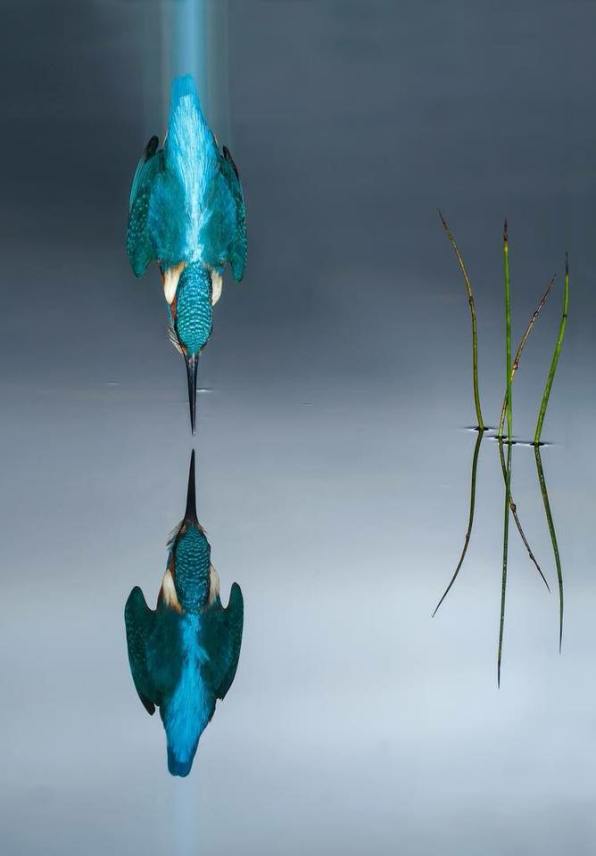
kingf

New Moon in Gemini, Monday June 3rd.
Mercury into Cancer (weakened).
Mars at 11 Cancer (in it’s fall; no Mars Magick).
Venus at 25 Taurus (rulership; VERY strong).
Jupiter, Saturn and Pluto retrograde.

Face the Shadow. We’re still excavating our lives with the Saturn-conjunct-Pluto-both-retrograde aspect. It will be closely exact THIS month, and will continue to wind it’s way through the year ahead. Wherever this is landing in your chart, you are being profoundly shifted. Saturn is forcing you to face the reality of your life, and Pluto is bringing up our toxic energy on a personal and collective level. Pluto is forcing us to purge, purify and reform ourselves. Resisting these shifts will create big problems, so just relax and go with the flow. Pay attention to stuff that isn’t working for you anymore and if you can, make changes.

Monday: New Moon in Gemini at 3am Pacific. Makes our minds and communication zingy. Great day for negotiation, socializing, studying, playing games, birthing new ideas and using your mind in a new way. Venus in a trine with Pluto last night brings intensity to creative endeavors and sexy time.

Tuesday: Moon in Cancer. Mercury into Cancer at 1:03pm Pacific. Mercury isn’t happy in Cancer, so no Mercury Magick for awhile… unless you’re sidereal of course. Mercury wants to be zippy, but gets drenched in this highly sensitive, nurturing watery energy of Cancer. Creative thinking is enhanced however.

Wednesday: Moon in Cancer. Handle things around your home and personal life. You might want to stay home tonight, relax and eat comfort food. Feelings are hyper-sensitive today and tomorrow, so avoid arguments or complications.

Thursday: Moon in Leo. It’s a good day to seek acknowledgement and generosity from those in leadership positions. It’s a good night to go out and see any type live performance.

Friday: Moon in Leo. Go out and shine, and show your heart.

Saturday: Moon into Virgo. A day of organization and self care. Also, Venus enters Gemini near 6:30pm Pacific, bringing fresh delight to any social gatherings. Creative time for writers, thinkers, and artists. Self expression flows easily, and we gravitate towards like-minded people.

Dark of the Moon

19-19

Dark of the Moon.
New Moon in Gemini this Sunday, June 2nd.
Mercury at 10 Gemini (in it’s rulership! VERY strong).
Mars at 7 Cancer (in it’s fall; no Mars Magick).
Venus at 13 Taurus (rulership; VERY strong).
Jupiter, Saturn and Pluto retrograde.

We are in the last quarter of the Moon this week – a time of reflection and quiet. We have a few days to wrap up loose ends, get organized, finish things, pay debts and simply rest. I always equate the dark of the Moon with the hours before dawn; the hush over the land. It’s the time of Magick and vivid dreaming.

Mercury in Gemini is in his element. It’s an excellent time for Mercury Magick. Our minds are honed, and we can wield the sword of truth. Socializing, writing, studying and communication are highlighted for the next month. Commerce and negotiation are also able to move forward after being stuck since last Fall.

Venus in Taurus is another strong placement, and fortifies nature, beauty, style, art and the power of women. What do you love doing with your time, are you willing to commit to it and make it a permanent part of your life’s foundation? Let your heart guide you to a higher vision for yourself.

Mars in Cancer means the planet is in it’s “fall” – it’s energy and expression is severely limited. Actions (especially attacks) will lack teeth and will fizzle out. It’s challenging to make headway when Mars is in Cancer, so focus on nurturing yourself and your home instead. With the North Node in Cancer right now, vulnerability is highlighted. Express yourself respectfully. The actions of men are diminished with Mars in Cancer. Seek out nurturing. ❤

Saturn and Pluto retrograding and conjunct through Capricorn. We are in the midst of deep, cathartic changes within ourselves, and outwardly in our society. This change will be in motion for the next couple of years, and will send us in a more mature and sustainable direction. We all need to take the focus off of others, or our outward experiences, and commit to doing our inner work. And with the North Node in Cancer, this inner work needs to happen in a loving and nurturing way.

Pluto brings up power struggles, catharsis, research, healing and our toxic energy. With Pluto’s power we can heal our toxic wounds and regenerate ourselves like the Phoenix.
Saturn wants us to grow up and face our problems like adults. It rules responsibility, discipline, commitment, stability, karma, and hard work. Face your fears and do the work you’ve been putting off. If you do this, Saturn will support you and give you the strength you need to move forward in your life.

Saturn conjunct Pluto will be exact in January 2020. You have until then to figure out who you’d like to be in the new age that’s dawning.  Pluto is evolution, and Saturn is structure. The two of them are meeting in a specific corner of your chart, helping you rebirth yourself. Who would you like to be?

Karma

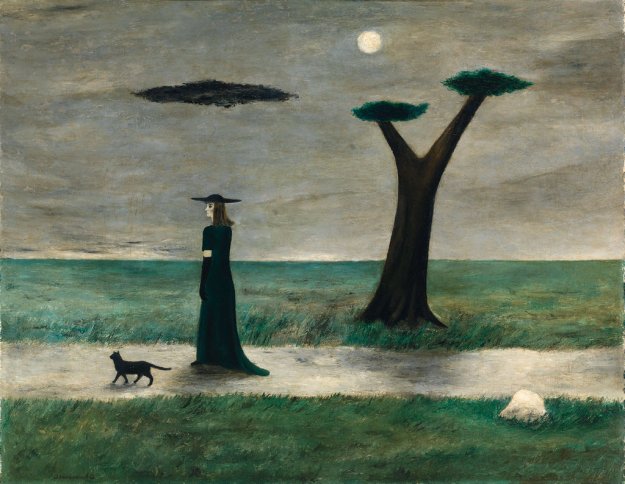
31tmag-witches-jumbo

Gertrude Abercrombie’s “The Stroll” (1943). Credit Credit Oil on fiberboard, Smithsonian American Art Museum, Gift of the Gertrude Abercrombie Trust

“Karma is not properly understood.
All of us have karma to work out. Karma is what we earn during our living. It is often thought of as some sort of equalizing force between good and evil. For example, it is wrongly believed that if one does a good thing a good thing will happen to them. Likewise, if one were to do an evil thing. It is often confused as an overbearing mother that spanks a badly-behaved child, and the things which lead to “bad karma” are often confused by the concept of sins.
About sins, I just have one thing to say about them in the Christian sense of the word. You are not punished for your sins: You are punished BY them. If you engage in activities which are alien to your own True Will and purpose, expect some blow-back. It is no more difficult to understand than that.
A person’s karma is equal to a person’s work in the world. In fact, Karma Yoga is the yoga of action. Nothing more. But Karma Yoga will only provide partial fulfillment. It is a means to an end, but not the end itself. In the Order of Thelemic Knights, we perform three yogas simultaneously. We have had to Westernize these in order to make them possible to reap benefits from them in our every day lives. They are, what we consider to be, the Grand Trifecta: Karma Yoga, Jnana Yoga, and Bhakti Yoga.
The first, Karma Yoga has already been explained. This is the yoga that we perform in order to make ripples in the universe in accordance to our individual Wills.
Jnana Yoga is the path of knowledge, or if you prefer, self-realization. Not to be confused with Raja Yoga which IS an end unto itself, and the purpose of all the other yogas.
Bhakti Yoga is the path of service and devotion, usually to a God or deity. In the Thelemic sense this translates into devotion toward ones Holy Guardian Angel.
The goal of these yogas is to achieve a method by which to practice Raja Yoga, which is considered “The Royal Yoga,” since it leads to the Ultimate Union. In modern days it has been defined rather profanely. For more on Raja Yoga and how it can be achieved, we recommend the Hatha Yoga Pradipika.
So, what does this have to do with mountains? They are our karma. These are mountains we must climb. Things that must be achieved to restore balance. In Christianity, the term in “we all have our cross to bear” is used to convey their paradigm. For Thelemic Knights we refer to these obstacles as campaigns, but it is really all the same thing. I am using the term mountains today because it has no religious connotation.
Here is what I have learned about climbing mountains. Sometimes, when climbing a mountain that seems insurmountable it may be easier to climb in the dark. This is a way to trick oneself into making the journey less difficult, since we cannot see the plateau in the dark, we are unable to see how far we must go. It is frightening and uncomfortable, but I promise you that if you are indeed doing the Work, you will not be alone in that darkness.
Also, there will be others climbing those mountains at the same time as you, for varying reasons specific to their own karma. Help one another. No one says you must climb these mountains alone, and perhaps helping some one might help you both reach that mountain top, especially if it is part of your karma to do so.

If things get unbearably difficult remember this: every journey has an end. You will eventually reach your goal, but there will always be another mountain.”

By Gerald del Campo
May 6, 2019

Women of Age and Wisdom

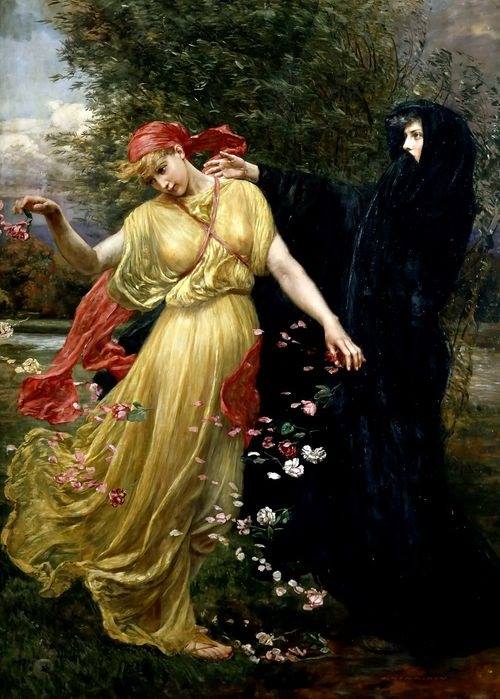
summer

“Women get more beautiful as they grow older. Not less.
Female youth is only prized in modern culture because it doesn’t represent as much of a threat spiritually to anyone who is frightened of divine feminine power.
As women grow and mature, they call in stronger forces of sacred feminine wisdom. They vibrate with the creative power of their stories.
They are more of a force to be reckoned with.
They see more, know more, feel more. They put up with a lot less bullshit.
When women are trained into thinking there is something fundamentally wrong with getting older, and are coerced into spending money, energy and power investing in ‘slowing the signs of ageing’, an enormous vault of divine love is lost.
Just think what would happen if all the women in the world started loving themselves even more with every year that passed.
Perhaps a total revolution would occur.~”
~Yogesh Kumar

5 Powerful Lessons Arya Stark Teaches about surviving trauma

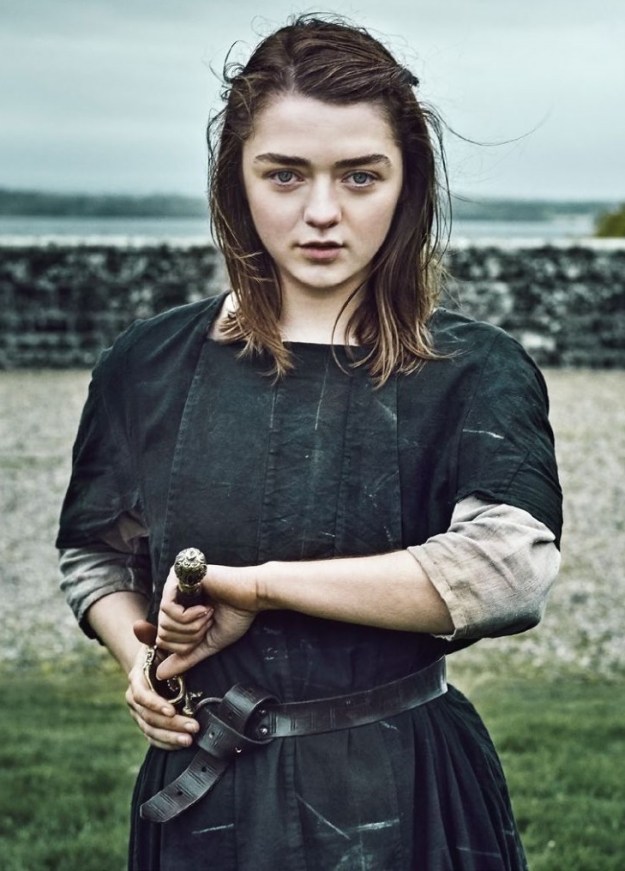
Arya-Stark

Arya Stark from the series “Game of Thrones” has fascinated me from the beginning. Now that we are at the end, I’m going to miss this character and the show itself. There is a rich, diverse, cast of characters in GoT, but I’ve loved watching Arya’s growth from the horrifying trauma she survived as a young girl, to the incredible woman she has become. This article addresses that very issue, and I found it to be full of insights for everyone. There are definitely spoilers here, so watch Season 8 first!

Here are the main five:

1. Her heightened instincts and ability to sense danger with alarming precision

As a child, Arya is trained by Syrio Forel (Miltos Yerolemou) to be as “swift as a deer, quiet as a shadow, calm as still water.” She also learns that fear cuts deeper than swords. These are all lessons that will inevitably help her to defeat the Night King. Arya’s training with Syrio lays the crucial foundation for her sword-fighting abilities, but it is actually the dangerous incidents she is forced to confront head-on in everyday life that challenge and hone her ability to identify and navigate danger skillfully. It is in her life experiences after her initial training that give her the platform to utilize these lessons. From living on the streets of King’s Landing to fighting a trained assassin from Braavos while temporarily blind, Arya learns to defend herself against a variety of perpetrators even when she is just a child on the cusp of womanhood.
Many of us are familiar with the term “hypervigilance,” a state of hyper-attunement we can develop to our surroundings due to trauma. Arya develops it in spades as she learns to evade danger in every corner. Often, hypervigilance is seen as a negative symptom of trauma, but actually, there are times our heightened attentiveness can be useful for our discernment of someone else’s true motives and character. According to researcher Willem Frankenhuis, people who have been abused in childhood can develop what Dr. Michael Ungar calls “an uncanny ability to detect threats in their environment, an enhanced capacity to learn new things, and even improved memories when it comes to paying attention to parts of their environment that are the most relevant.”

As therapist Athena Phillips writes in a 2012 article for GoodTherapy:
“Survivors of trauma regularly inform me of what they experience as something akin to having superpowers. The capacity to feel things other people can’t, to identify either the goodness or inherent evil in someone just by looking at them, or to ‘predict’ interpersonal outcomes are some of the new-found abilities people have described. People who have experienced trauma often indicate that they are able to pick up on covert human behaviors, and there is a great deal of trust in their capacity to intuit. Oftentimes, these powers really do exist; survivors have developed a discriminating aptitude for picking up on environmental cues that may have significance to them.”

2. Her fragmented sense of identity and search for her true identity and wholeness.

Trauma creates fragments: It shatters the connection among memories, thoughts, emotions, and the self. Complex trauma survivors often find themselves confronting disparate inner parts that developed as a result of the traumas they endured; according to trauma experts, they must find ways to identify and integrate these parts in healthy ways in order to reach their true core calm and compassionate self. Much like any complex trauma survivor, Arya tries to escape the terrors of her childhood by taking on other identities and dissociating from her past except for her justified rage at those who murdered her family members. Arya’s need for vengeance ultimately creates a “protector self” that keeps her focused on a list of people she must kill rather than her true self and her grief.
Arya’s search for her own identity is also astutely represented by her brutal experiences at Braavos where she learns to become “no one” in her training to become a Faceless Man and assassin. There, she is beaten, terrorized, and challenged to fight back. Ironically, it is her journey to becoming no one that eventually leads her to own the fact that she is indeed someone. As she tells Jaqen H’ghar bravely and with conviction, “A girl is Arya Stark of Winterfell, and I am going home.” It is only when she integrates her darkness within her true self, recognizes her true power and strength from the traumas she has emerged from, that she decides she is going home. She goes home not just to her family but to herself.

3. Her post-traumatic growth and psychological self-mastery

As therapist Andrea Schneider notes shrewdly in her Game of Thrones blog series, characters who have endured trauma on this show can exhibit promising signs of post-traumatic growth, the positive psychological changes we benefit from after enduring adversity. While regaining a pre-trauma identity is next to impossible for characters like Arya, her post-traumatic growth is tremendous.
Not only does Arya learn to incorporate the life lessons of her trauma into her sword fighting and archery skills, she learns psychological mastery. She learns the art of resourcefulness even when she has nothing. She learns how to stealthily collect information (like when she does when acting as cupbearer to Tywin Lannister) to further her journey. She learns a great deal about patience, self-control, confidence, observing rather than reacting, and how to put herself in the mindset of her attackers and predators around her so she can anticipate what they will do—and can preemptively strike. As a result of her traumas, she gains wisdom and skill sets beyond her years, which many adults in the show are still struggling to obtain.
Arya has no explicit desire to be a leader or queen, but her ability to lead due to her experiences make her more fit for the throne than many others who seek it for personal power. It is her desire for justice, rather than power, that makes her unstoppable. Complex trauma survivors experience many of these same psychological benefits as they process, heal, and grow from their traumas. They can learn to navigate life with an increased sense of gratitude, fortitude, and develop a habit for making the best of their circumstances to create success and joy at an even more intense level than someone who has never been traumatized. As they heal, they have an incentive, drive, and determination that can far surpass that of the average person, as well as a greater sense of meaning.
It is only when Arya Stark integrates her darkness within her true self and recognizes her true power that she decides she is going home.

4. Her darkness has to be integrated in order to fully own her light.

Arya is a curious character in that she is not encouraged to forgive those who have wronged her or took the lives of her loved ones. That is what makes her one of the most phenomenal female characters on television: her darkness is not minimized or sugarcoated. It is recognized, along with her authentic outrage, in all of its unflinching glory. And skilled trauma therapists agree: forced, premature forgiveness can actually hinder a survivor’s journey because it invalidates how we really feel and does not give us the time or space to actually process our traumas.

Trauma therapist Anastasia Pollock puts it this way:
“The people I work with in the therapy room are resilient and courageous. They are able to work through their traumas, but many get caught up on one point: They believe they are supposed to forgive the perpetrator but can’t seem to get there. This is what I tell them: You don’t have to forgive in order to move on. Emotions are important and automatic. When we can acknowledge and appreciate even the darkest, most negative-feeling emotions, they often soften and release. As soon as I say, ‘You don’t have to forgive,’ the person usually breathes a sigh of relief.”

Unlike a woman who turns the other cheek and goes immediately into love and light without any kind of transformation beforehand, Arya turns to her sword, Needle, to deliver a much-needed message to perpetrators like Walder Frey (David Bradley). The North remembers, and so does she. She avenges her loved ones one by one, and when she does, we can’t help but cheer from the sidelines.
Although in real life this form of vigilante justice is unrealistic, not recommended and quite gory (none of us should be baking our enemies into pies—we’d have a more productive time processing our traumas in therapy), we learn an important lesson about trauma: it cannot be spiritually bypassed. Our so-called “dark” emotions must be acknowledged in order to fully own our true light. The outrage and rage we feel must be seen, heard, experienced, confronted and (while perhaps not shown on this show) healthily expressed in order to be healed. Whether Arya’s quest for revenge is misplaced is up for debate, but one thing is for sure: this young woman is not your typical depiction of a trauma survivor who forgives and forgets her way into healing. Yet her intense emotions are an all too real part of this journey.

5. Her resilience and strength would not be the same without her experiences.

While none of us would ever volunteer for the traumas we experienced, we can’t help but admit that we would not be who we are without them. We can still validate and honor the injustice of our traumas while acknowledging the internal resources and coping skills they granted us. Trauma can give us the strength and resilience of a sumo wrestler, and Arya is no exception. As whole families are killed, legacies wiped out, and kingdoms come under siege, Arya remains—one of the few survivors of her family. A weary traveler and warrior, she is forced to confront what no child should have to endure. But she does endure, and she is better for it.
At the end, it is this little girl who grows up to be the warrior woman—who ultimately conquers the darkness. No one expected her or saw her coming. Everyone underestimated her. And therein lies her greatest power. It was the traumas of her past that gave her the ability to defeat the Night King, to avenge her loved ones, and to protect her community. Complex trauma survivors, too, are capable of this same kind of resilience—and the ability to give back what they never received.
Arya is every little girl who grew up in terror and trauma. Who survives impossible situations through her resilience, grit, talent, and determination. Whose identity is previously in fragments, only to become whole as she comes into the woman she was always meant to be. And yes, she is truly ruthless when it comes to her enemies. Yet it is perhaps her ability to own her demons that make her even more powerful when she’s avenging her loved ones, enacting some sweet justice and saving the world. We can all learn life lessons about trauma from this brilliant, multifaceted and truly one of a kind character. She is all of us who have survived—and thrived.
This article originally appeared on Psych Central as “5 Powerful Lessons Arya Stark from Game of Thrones Teaches Us About Complex Trauma Survivors” 🔥

by Shahida Arabi: a bestselling author of three books on emotional abuse and trauma.

Medieval Magick – Chapter 1 of ‘Secrets of the Magickal Grimoires’

Interesting post by Aaron Leitch on the historical development of Western occultism.

kheph777's avatarAnanael (The Secrets of Wisdom)

And while we are on the subject:

Chapter One of “Secrets of the Magickal Grimoires”:
http://kheph777.tripod.com/secrets_chap1.html

——————-

Medieval Magick

Chapter One of Secrets of the Magickal Grimoires
by Aaron Leitch

The Medieval and Renaissance Eras

The “classical age” of the grimoiric texts is roughly equivalent to the span of the Middle (or Medieval) and Renaissance ages. The Middle Ages began roughly in the fifth century CE, when the empire of Rome was both infiltrated and violently overrun by Germanic tribes. This is when the famous sacking of Rome took place at the hands of the Vandals, in the year 455 CE. The established government was slowly inched out of power, and Italy became little more than an extension of a German kingdom. The vast Roman Republic faded away, and was replaced by a wholly agricultural society.

The Roman government, however, was not willing to simply vanish into the pages of…

View original post 17,882 more words