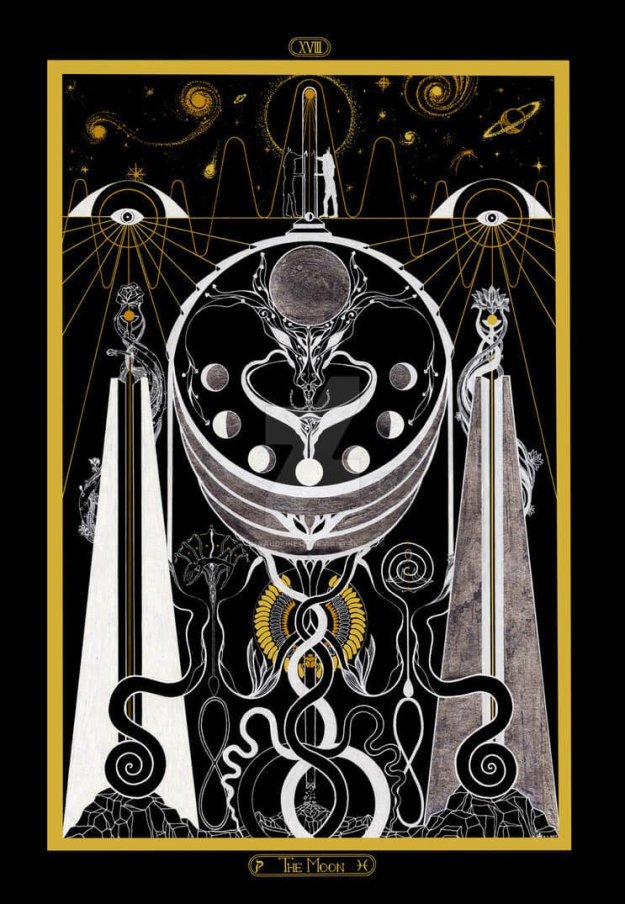
Dark of the Moon

19-19

Dark of the Moon.
New Moon in Gemini this Sunday, June 2nd.
Mercury at 10 Gemini (in it’s rulership! VERY strong).
Mars at 7 Cancer (in it’s fall; no Mars Magick).
Venus at 13 Taurus (rulership; VERY strong).
Jupiter, Saturn and Pluto retrograde.

We are in the last quarter of the Moon this week – a time of reflection and quiet. We have a few days to wrap up loose ends, get organized, finish things, pay debts and simply rest. I always equate the dark of the Moon with the hours before dawn; the hush over the land. It’s the time of Magick and vivid dreaming.

Mercury in Gemini is in his element. It’s an excellent time for Mercury Magick. Our minds are honed, and we can wield the sword of truth. Socializing, writing, studying and communication are highlighted for the next month. Commerce and negotiation are also able to move forward after being stuck since last Fall.

Venus in Taurus is another strong placement, and fortifies nature, beauty, style, art and the power of women. What do you love doing with your time, are you willing to commit to it and make it a permanent part of your life’s foundation? Let your heart guide you to a higher vision for yourself.

Mars in Cancer means the planet is in it’s “fall” – it’s energy and expression is severely limited. Actions (especially attacks) will lack teeth and will fizzle out. It’s challenging to make headway when Mars is in Cancer, so focus on nurturing yourself and your home instead. With the North Node in Cancer right now, vulnerability is highlighted. Express yourself respectfully. The actions of men are diminished with Mars in Cancer. Seek out nurturing. ❤

Saturn and Pluto retrograding and conjunct through Capricorn. We are in the midst of deep, cathartic changes within ourselves, and outwardly in our society. This change will be in motion for the next couple of years, and will send us in a more mature and sustainable direction. We all need to take the focus off of others, or our outward experiences, and commit to doing our inner work. And with the North Node in Cancer, this inner work needs to happen in a loving and nurturing way.

Pluto brings up power struggles, catharsis, research, healing and our toxic energy. With Pluto’s power we can heal our toxic wounds and regenerate ourselves like the Phoenix.
Saturn wants us to grow up and face our problems like adults. It rules responsibility, discipline, commitment, stability, karma, and hard work. Face your fears and do the work you’ve been putting off. If you do this, Saturn will support you and give you the strength you need to move forward in your life.

Saturn conjunct Pluto will be exact in January 2020. You have until then to figure out who you’d like to be in the new age that’s dawning.  Pluto is evolution, and Saturn is structure. The two of them are meeting in a specific corner of your chart, helping you rebirth yourself. Who would you like to be?

Karma

31tmag-witches-jumbo

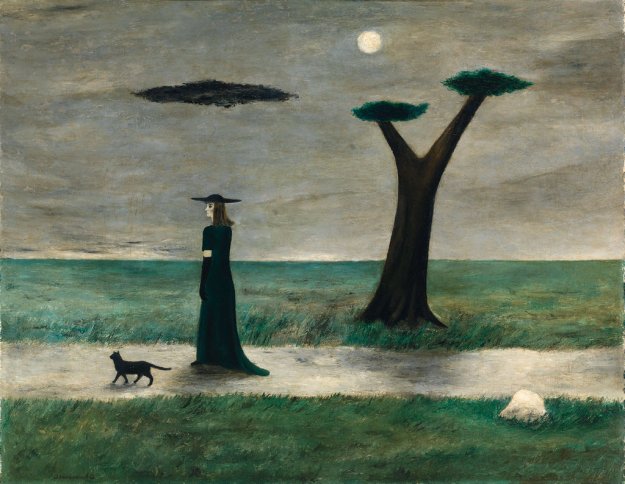
Gertrude Abercrombie’s “The Stroll” (1943). Credit Credit Oil on fiberboard, Smithsonian American Art Museum, Gift of the Gertrude Abercrombie Trust

“Karma is not properly understood.
All of us have karma to work out. Karma is what we earn during our living. It is often thought of as some sort of equalizing force between good and evil. For example, it is wrongly believed that if one does a good thing a good thing will happen to them. Likewise, if one were to do an evil thing. It is often confused as an overbearing mother that spanks a badly-behaved child, and the things which lead to “bad karma” are often confused by the concept of sins.
About sins, I just have one thing to say about them in the Christian sense of the word. You are not punished for your sins: You are punished BY them. If you engage in activities which are alien to your own True Will and purpose, expect some blow-back. It is no more difficult to understand than that.
A person’s karma is equal to a person’s work in the world. In fact, Karma Yoga is the yoga of action. Nothing more. But Karma Yoga will only provide partial fulfillment. It is a means to an end, but not the end itself. In the Order of Thelemic Knights, we perform three yogas simultaneously. We have had to Westernize these in order to make them possible to reap benefits from them in our every day lives. They are, what we consider to be, the Grand Trifecta: Karma Yoga, Jnana Yoga, and Bhakti Yoga.
The first, Karma Yoga has already been explained. This is the yoga that we perform in order to make ripples in the universe in accordance to our individual Wills.
Jnana Yoga is the path of knowledge, or if you prefer, self-realization. Not to be confused with Raja Yoga which IS an end unto itself, and the purpose of all the other yogas.
Bhakti Yoga is the path of service and devotion, usually to a God or deity. In the Thelemic sense this translates into devotion toward ones Holy Guardian Angel.
The goal of these yogas is to achieve a method by which to practice Raja Yoga, which is considered “The Royal Yoga,” since it leads to the Ultimate Union. In modern days it has been defined rather profanely. For more on Raja Yoga and how it can be achieved, we recommend the Hatha Yoga Pradipika.
So, what does this have to do with mountains? They are our karma. These are mountains we must climb. Things that must be achieved to restore balance. In Christianity, the term in “we all have our cross to bear” is used to convey their paradigm. For Thelemic Knights we refer to these obstacles as campaigns, but it is really all the same thing. I am using the term mountains today because it has no religious connotation.
Here is what I have learned about climbing mountains. Sometimes, when climbing a mountain that seems insurmountable it may be easier to climb in the dark. This is a way to trick oneself into making the journey less difficult, since we cannot see the plateau in the dark, we are unable to see how far we must go. It is frightening and uncomfortable, but I promise you that if you are indeed doing the Work, you will not be alone in that darkness.
Also, there will be others climbing those mountains at the same time as you, for varying reasons specific to their own karma. Help one another. No one says you must climb these mountains alone, and perhaps helping some one might help you both reach that mountain top, especially if it is part of your karma to do so.

If things get unbearably difficult remember this: every journey has an end. You will eventually reach your goal, but there will always be another mountain.”

By Gerald del Campo
May 6, 2019

Full Moon in Scorpio

veil

Full Moon at 27 Scorpio 2:11pm Pacific, Saturday May 18th. (Moon in it’s fall)
Mercury at 21 Taurus (no mercurial Magick until May 21st)
Mars at 2 Cancer (in it’s fall; no Mars Magick)
Venus at 1 Taurus (rulership; VERY strong)
Jupiter, Saturn and Pluto retrograde

It’s as intense as it sounds. Avoid social complications this weekend, and if they are unavoidable, keep calm and try not to create more of a crisis. That being said it’s also possible to deeply connect with a lover or companion. This is a weekend to go within and explore your own triggers, face your fears, swim through your own depths and rebirth yourself. Scorpio is a psychological sign, and the Full Moon will illuminate the depths of your psyche.

Mercury in Taurus wants to slow down and think in a practical way – but the energy of Mercury wants to flit about like a hummingbird. It’s a strange placement but not too terrible. Organize your possessions and negotiate at home and work. Gemini’s and Virgo’s might appreciate the focus on their material lives for another week.

Venus in Taurus is extremely well placed. Excellent month for creativity, money, relationships, sensuality, food and beauty. Taurus or Libra Sun (or Rising) people will feel centered now, and can make strides towards creating a thriving life. You guys are in your element. Bring more nature, romance, art and music into your life. Women will feel empowered, and the legislation to control a women’s body will probably fail miserably because of this placement.

Mars in Cancer means the planet is in it’s “fall” – it’s energy and expression is severely limited. Actions (especially attacks) will lack teeth and will fizzle out. It’s challenging to make headway when Mars is in Cancer, so focus on nurturing yourself and your home instead. With the North Node in Cancer right now, vulnerability and nurturing is highlighted. Express yourself respectfully. The actions of men are diminished with Mars in Cancer, and they need to seek out nurturing. Call your Moms ❤

The psychological depth of this Full Moon in Scorpio tomorrow, is further enhanced by Saturn and Pluto retrograding and conjunct through Capricorn. We are in the midst of deep, cathartic changes within ourselves, and outwardly in our society. This change will be in motion for the next couple of years, and will send us in a more mature and sustainable direction. We all need to take the focus off of others, or our outward experiences, and commit to doing our inner work. And with the North Node in Cancer, this inner work needs to happen in a loving and nurturing way.

Pluto brings up power struggles, catharsis, research, healing and our toxic energy. With Pluto’s power we can heal our toxic wounds and regenerate ourselves like the Phoenix.

Saturn wants us to grow up and face our problems like adults. It rules responsibility, discipline, commitment, stability, karma, and hard work. Face your fears and do the work you’ve been putting off. If you do this, Saturn will support you and give you the strength you need to move forward in your life.


Women of Age and Wisdom

summer

“Women get more beautiful as they grow older. Not less.
Female youth is only prized in modern culture because it doesn’t represent as much of a threat spiritually to anyone who is frightened of divine feminine power.
As women grow and mature, they call in stronger forces of sacred feminine wisdom. They vibrate with the creative power of their stories.
They are more of a force to be reckoned with.
They see more, know more, feel more. They put up with a lot less bullshit.
When women are trained into thinking there is something fundamentally wrong with getting older, and are coerced into spending money, energy and power investing in ‘slowing the signs of ageing’, an enormous vault of divine love is lost.
Just think what would happen if all the women in the world started loving themselves even more with every year that passed.
Perhaps a total revolution would occur.~”
~Yogesh Kumar

5 Powerful Lessons Arya Stark Teaches about surviving trauma

Arya-Stark

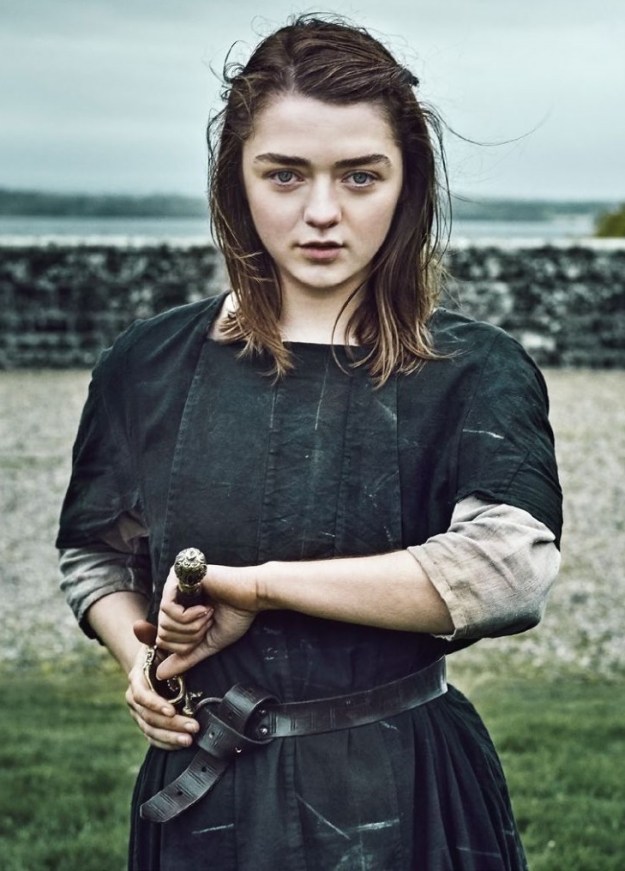
Arya Stark from the series “Game of Thrones” has fascinated me from the beginning. Now that we are at the end, I’m going to miss this character and the show itself. There is a rich, diverse, cast of characters in GoT, but I’ve loved watching Arya’s growth from the horrifying trauma she survived as a young girl, to the incredible woman she has become. This article addresses that very issue, and I found it to be full of insights for everyone. There are definitely spoilers here, so watch Season 8 first!

Here are the main five:

1. Her heightened instincts and ability to sense danger with alarming precision

As a child, Arya is trained by Syrio Forel (Miltos Yerolemou) to be as “swift as a deer, quiet as a shadow, calm as still water.” She also learns that fear cuts deeper than swords. These are all lessons that will inevitably help her to defeat the Night King. Arya’s training with Syrio lays the crucial foundation for her sword-fighting abilities, but it is actually the dangerous incidents she is forced to confront head-on in everyday life that challenge and hone her ability to identify and navigate danger skillfully. It is in her life experiences after her initial training that give her the platform to utilize these lessons. From living on the streets of King’s Landing to fighting a trained assassin from Braavos while temporarily blind, Arya learns to defend herself against a variety of perpetrators even when she is just a child on the cusp of womanhood.
Many of us are familiar with the term “hypervigilance,” a state of hyper-attunement we can develop to our surroundings due to trauma. Arya develops it in spades as she learns to evade danger in every corner. Often, hypervigilance is seen as a negative symptom of trauma, but actually, there are times our heightened attentiveness can be useful for our discernment of someone else’s true motives and character. According to researcher Willem Frankenhuis, people who have been abused in childhood can develop what Dr. Michael Ungar calls “an uncanny ability to detect threats in their environment, an enhanced capacity to learn new things, and even improved memories when it comes to paying attention to parts of their environment that are the most relevant.”

As therapist Athena Phillips writes in a 2012 article for GoodTherapy:
“Survivors of trauma regularly inform me of what they experience as something akin to having superpowers. The capacity to feel things other people can’t, to identify either the goodness or inherent evil in someone just by looking at them, or to ‘predict’ interpersonal outcomes are some of the new-found abilities people have described. People who have experienced trauma often indicate that they are able to pick up on covert human behaviors, and there is a great deal of trust in their capacity to intuit. Oftentimes, these powers really do exist; survivors have developed a discriminating aptitude for picking up on environmental cues that may have significance to them.”

2. Her fragmented sense of identity and search for her true identity and wholeness.

Trauma creates fragments: It shatters the connection among memories, thoughts, emotions, and the self. Complex trauma survivors often find themselves confronting disparate inner parts that developed as a result of the traumas they endured; according to trauma experts, they must find ways to identify and integrate these parts in healthy ways in order to reach their true core calm and compassionate self. Much like any complex trauma survivor, Arya tries to escape the terrors of her childhood by taking on other identities and dissociating from her past except for her justified rage at those who murdered her family members. Arya’s need for vengeance ultimately creates a “protector self” that keeps her focused on a list of people she must kill rather than her true self and her grief.
Arya’s search for her own identity is also astutely represented by her brutal experiences at Braavos where she learns to become “no one” in her training to become a Faceless Man and assassin. There, she is beaten, terrorized, and challenged to fight back. Ironically, it is her journey to becoming no one that eventually leads her to own the fact that she is indeed someone. As she tells Jaqen H’ghar bravely and with conviction, “A girl is Arya Stark of Winterfell, and I am going home.” It is only when she integrates her darkness within her true self, recognizes her true power and strength from the traumas she has emerged from, that she decides she is going home. She goes home not just to her family but to herself.

3. Her post-traumatic growth and psychological self-mastery

As therapist Andrea Schneider notes shrewdly in her Game of Thrones blog series, characters who have endured trauma on this show can exhibit promising signs of post-traumatic growth, the positive psychological changes we benefit from after enduring adversity. While regaining a pre-trauma identity is next to impossible for characters like Arya, her post-traumatic growth is tremendous.
Not only does Arya learn to incorporate the life lessons of her trauma into her sword fighting and archery skills, she learns psychological mastery. She learns the art of resourcefulness even when she has nothing. She learns how to stealthily collect information (like when she does when acting as cupbearer to Tywin Lannister) to further her journey. She learns a great deal about patience, self-control, confidence, observing rather than reacting, and how to put herself in the mindset of her attackers and predators around her so she can anticipate what they will do—and can preemptively strike. As a result of her traumas, she gains wisdom and skill sets beyond her years, which many adults in the show are still struggling to obtain.
Arya has no explicit desire to be a leader or queen, but her ability to lead due to her experiences make her more fit for the throne than many others who seek it for personal power. It is her desire for justice, rather than power, that makes her unstoppable. Complex trauma survivors experience many of these same psychological benefits as they process, heal, and grow from their traumas. They can learn to navigate life with an increased sense of gratitude, fortitude, and develop a habit for making the best of their circumstances to create success and joy at an even more intense level than someone who has never been traumatized. As they heal, they have an incentive, drive, and determination that can far surpass that of the average person, as well as a greater sense of meaning.
It is only when Arya Stark integrates her darkness within her true self and recognizes her true power that she decides she is going home.

4. Her darkness has to be integrated in order to fully own her light.

Arya is a curious character in that she is not encouraged to forgive those who have wronged her or took the lives of her loved ones. That is what makes her one of the most phenomenal female characters on television: her darkness is not minimized or sugarcoated. It is recognized, along with her authentic outrage, in all of its unflinching glory. And skilled trauma therapists agree: forced, premature forgiveness can actually hinder a survivor’s journey because it invalidates how we really feel and does not give us the time or space to actually process our traumas.

Trauma therapist Anastasia Pollock puts it this way:
“The people I work with in the therapy room are resilient and courageous. They are able to work through their traumas, but many get caught up on one point: They believe they are supposed to forgive the perpetrator but can’t seem to get there. This is what I tell them: You don’t have to forgive in order to move on. Emotions are important and automatic. When we can acknowledge and appreciate even the darkest, most negative-feeling emotions, they often soften and release. As soon as I say, ‘You don’t have to forgive,’ the person usually breathes a sigh of relief.”

Unlike a woman who turns the other cheek and goes immediately into love and light without any kind of transformation beforehand, Arya turns to her sword, Needle, to deliver a much-needed message to perpetrators like Walder Frey (David Bradley). The North remembers, and so does she. She avenges her loved ones one by one, and when she does, we can’t help but cheer from the sidelines.
Although in real life this form of vigilante justice is unrealistic, not recommended and quite gory (none of us should be baking our enemies into pies—we’d have a more productive time processing our traumas in therapy), we learn an important lesson about trauma: it cannot be spiritually bypassed. Our so-called “dark” emotions must be acknowledged in order to fully own our true light. The outrage and rage we feel must be seen, heard, experienced, confronted and (while perhaps not shown on this show) healthily expressed in order to be healed. Whether Arya’s quest for revenge is misplaced is up for debate, but one thing is for sure: this young woman is not your typical depiction of a trauma survivor who forgives and forgets her way into healing. Yet her intense emotions are an all too real part of this journey.

5. Her resilience and strength would not be the same without her experiences.

While none of us would ever volunteer for the traumas we experienced, we can’t help but admit that we would not be who we are without them. We can still validate and honor the injustice of our traumas while acknowledging the internal resources and coping skills they granted us. Trauma can give us the strength and resilience of a sumo wrestler, and Arya is no exception. As whole families are killed, legacies wiped out, and kingdoms come under siege, Arya remains—one of the few survivors of her family. A weary traveler and warrior, she is forced to confront what no child should have to endure. But she does endure, and she is better for it.
At the end, it is this little girl who grows up to be the warrior woman—who ultimately conquers the darkness. No one expected her or saw her coming. Everyone underestimated her. And therein lies her greatest power. It was the traumas of her past that gave her the ability to defeat the Night King, to avenge her loved ones, and to protect her community. Complex trauma survivors, too, are capable of this same kind of resilience—and the ability to give back what they never received.
Arya is every little girl who grew up in terror and trauma. Who survives impossible situations through her resilience, grit, talent, and determination. Whose identity is previously in fragments, only to become whole as she comes into the woman she was always meant to be. And yes, she is truly ruthless when it comes to her enemies. Yet it is perhaps her ability to own her demons that make her even more powerful when she’s avenging her loved ones, enacting some sweet justice and saving the world. We can all learn life lessons about trauma from this brilliant, multifaceted and truly one of a kind character. She is all of us who have survived—and thrived.
This article originally appeared on Psych Central as “5 Powerful Lessons Arya Stark from Game of Thrones Teaches Us About Complex Trauma Survivors” 🔥

by Shahida Arabi: a bestselling author of three books on emotional abuse and trauma.

Medieval Magick – Chapter 1 of ‘Secrets of the Magickal Grimoires’

Interesting post by Aaron Leitch on the historical development of Western occultism.

kheph777's avatarAnanael (The Secrets of Wisdom)

And while we are on the subject:

Chapter One of “Secrets of the Magickal Grimoires”:
http://kheph777.tripod.com/secrets_chap1.html

——————-

Medieval Magick

Chapter One of Secrets of the Magickal Grimoires
by Aaron Leitch

The Medieval and Renaissance Eras

The “classical age” of the grimoiric texts is roughly equivalent to the span of the Middle (or Medieval) and Renaissance ages. The Middle Ages began roughly in the fifth century CE, when the empire of Rome was both infiltrated and violently overrun by Germanic tribes. This is when the famous sacking of Rome took place at the hands of the Vandals, in the year 455 CE. The established government was slowly inched out of power, and Italy became little more than an extension of a German kingdom. The vast Roman Republic faded away, and was replaced by a wholly agricultural society.

The Roman government, however, was not willing to simply vanish into the pages of…

View original post 17,882 more words

Love

love

“Love is patient, love is kind, it does not envy, it does not boast, it is not proud, it is not rude, it is not self-seeking, it is not easily angered, it keeps no record of wrongs, love does not delight in evil, but rejoices with the truth, it always protects, always trusts, always hopes, always perseveres, love never fails” ((( ♥ )))

-Unknown

The Case for Disappointing Men

Photo courtesy of Toni Birrer(CC ShareALike)
“Women, in general, are conditioned to hinge our value and self worth on how well we can please others, what we can provide for them, how well we take care of them — because our safety, our social status, our success in the world depends on it.”

This article is such a great read! It illustrates some of the common experiences of women in relationships. I related to most of what the author sets forth here – not just in my romantic history but across the board in many different types of partnerships!

Here are some excerpts from the full article:

“My husband used to sigh a lot. He’d do it even when nothing was wrong. Sighs punctuated his sentences. He’d plop down with them, rise from his seat with them. He never noticed himself doing it, but I did. It became a point of contention in our house. Each time he sighed was like nails on the chalkboard of my soul — I felt a visceral need to get to the source of it.
“What’s wrong?” I’d always ask, immediately stressed.
“Huh?”
I would try to get him to assign the sigh a cause and he would assert that it was meaningless and to ignore it. I could never let it go, though. Because his sighs felt like soft accusations, made worse by the fact that I could not resolve an unspecified slight. His sighs signaled discontent, and I have been groomed by society to believe that his discontent is unwaveringly my responsibility. And so somewhere buried beyond my ability to transcend, every sigh felt like a declaration that I was disappointing him. And for many women, an accusation of being disappointing, no matter how soft, always feels like a threat of disposability….

And so when men express displeasure, many of us compensate. We remain on high alert for potential problems. We become so good at deterring disappointment, we anticipate needs before they have to be vocalized. We tidy messes before the messes are even made. Even this fixation is a disappointment to many men. Women are deemed neurotic, anxious, and uptight by men who only get to consider themselves easygoing because they’ve never reconciled their nature with the ways women shield them from discomfort. There are men kept so warm within the worlds women create that they forget that it’s winter, forget that generating warmth requires energy.

The other day after a very long day with my kids I mustered the energy to clean. On my hands and knees I picked up tiny pieces of hot pink play-dough, dozens of scattered toys. My son came behind me and undid it all within minutes. Something shifted in me.
“You saw that mommy went through all that effort to keep the house clean, right?”
“Yes, Mommy, Mickey Mouse,” he said, his eyes on the tv. He wasn’t listening.
I got up and turned it off, and told him to pick up his toys. He threw himself to the ground in a tantrum, and I let him lay there until he was done. I decided his disappointment was his own problem to resolve.

The way to prevent raising sons who would dispose of me for disappointing them is not to never disappoint them. It’s to teach them to be comfortable with their own disappointment. To allow myself some humanity and make them responsible for navigating their feelings. I am doing myself, them, and other women a disservice in not doing so. In a world where men feel entitled to women’s bodies, time, and labor — it’s imperative to teach them otherwise. That requires a little disappointment on their end.

…If I want to make myself comfortable in my own life, I have to decide to not be deterred by the disappointment of others. Not doing so means being chronically disappointed in myself. I am teaching myself to let people down for my own sake, no matter their power. Because power over myself is the only power not contingent on others. Power over myself can’t be taken away, only relinquished.”

New Moon in Taurus


Christies_60115379_1_master

Minton Majolica, Aubergine-Ground ‘Marochetti’ Cistern, Mid-19th Century

New Moon in Taurus 3:45pm Pacific, Saturday May 4th. (exalted Moon)
Mercury at 26 Aries
Mars at 22 Gemini
Venus at 17 Aries
Jupiter, Saturn and Pluto retrograde

Today’s new Moon occurs in the middle of Taurus – the 2nd decan:  “A man with a body like a camel, with cow’s hooves on his fingers, and he is completely covered with a torn linen cloth. He desires to work on the land, sow and build. This is a face of nobility, power and rewarding for the people” ~ Picatrix

The Moon is “exalted” in Taurus, which means it expresses itself easily. This gives a calm, sensuous and indulgent feel to this weekend. With Mercury in Aries in mutual reception with Mars in Gemini, we can also grasp and share the truth. Kickstart your mind into a higher gear, and focus on achieving your potential. All of the earth signs bring up the issue of what we’re committing ourselves to, and if we’re in need of an update.

A new moon occurs every month when the Sun and Moon are in the same sign. It’s the beginning of a 30-day lunar cycle, and it’s when you set your intentions for the coming month. As the Moon grows, your intention grows in form and scope; coming to fruition at the full Moon two weeks later. Forming an intention is instinctual, since the Moon is black and there’s no illumination of the night sky. The Sun (the light) is also hidden, so we must ‘feel” our way, since we cannot see clearly.

Uranus is currently in Taurus, and it will shake up and change wherever Taurus sits in your chart. It’s probably an area that has started feeling stagnant; a corner of your life that needs some fresh air. Uranus brings liberation, and a new way of expressing the genius within you. This corner of your like will radically transform in the next seven years. If you want a reading on Uranus and your chart, You can book a reading here.


With retrograde Saturn and Pluto trine the Sun and Moon, we re-examine the ground we’ve traveled over the last year, and heal our karma. Hard work finally pays off. We experience the abundance of life when we plan, build, and take responsibility.