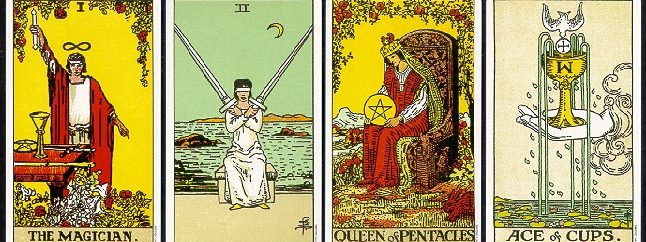
Rose Lyon is a highly regarded American occultist, psychic and healer residing in Sacramento. She began formal study of the occult in her twenties as a regular visitor to a local curiosity shop. She befriended a local Wiccan priestess who taught her astrology, magic and tarot. This led to her formal initiation into the Craft in 1988. She continued her studies by joining the Clairvoyant training program at Psychic Horizons, graduating as a reverend in 1993. With a hunger for art and history she enrolled at SFSU in the theater program where her training exposed her to the ancient connections between shamanism and theater. Majoring in Drama with an emphasis in World Religions, she studied the history of Greek and European theater as well as Women's Studies. She graduated with a BA in Drama & Performance in 1997. Since then she has expanded her occult knowledge through studies of Irish folklore, Chinese astrology, herbal healing and Feng Shui. She is an adept healer and psychic, and continues her practice of tarot readings, psychic healings and marriage ceremonies while studying Ceremonial Magick and Qabalah with the Temple of the Silver Star.
Excellent article and video on the tarot by Alejandro Jodorowsky.
“The practice of cartomancy, or divination with cards, dates back several hundred years to at least 14th century Europe, perhaps by way of Turkey. But the specific form we know of, the tarot, likely emerged in the 17th century, and the deck we’re all most familiar with—the Rider-Waite Tarot—didn’t appear until 1909. Popular mainly with occultists like Aleister Crowley and Madame Blavatsky in the early 20th century, the tarot exploded into popular culture in the new age 70s with books like Stuart Kaplan’s Tarot Cards for Fun and Fortune Telling, and by way of cult filmmakers like Alejandro Jodorowsky.
Since its relatively recent popularization, “fun” and “fortune telling” have more or less defined most people’s attitude to the tarot, whether they approve or disapprove of either one. But for artists and poets like William Butler Yeats, T.S. Eliot, and surrealist director Jodorowsky—whose film narration is perhaps the most poetic in modern cinema—the tarot has always meant something much more mysterious and inspiring. “The tarot,” says Jodorowsky in the short film above, “will teach you how to create a soul.”
After studying the Major and Minor Arcana and the suits, and puzzling over the symbols on each card, Jodorowsky discovered that “all 78 cards could be joined in a mandala, in just one image.” Learning to see the deck thus, “You must not talk about the future. The future is a con. The tarot is a language that talks about the present. If you use it to see the future, you become a conman.” Like other mystical poets, Jodorowsky’s study of the tarot did not lead him to the supernatural but to the creative act.
And like many a poet before him, Jodorowsky explored the journey of the Fool in his 1973 film The Holy Mountain, a “dazzling, rambling, often incoherent satire,” writes Matt Zoller Seitz, that “unfurls like a hallucinogenic daydream.” Jodorowsky’s cinematic dream logic comes not only from his work as a “shamanic psychotherapist.” He also credits the tarot for his psychomagical realism. “For me,” says Jodorowsky in the video at the top, “the tarot was something more serious. It was a deep psychological search.” The result of that search—Jodorowsky’s singular and totally unforgettable body of work—speaks to us of the value of such an undertaking, whatever means one uses to get there.
Or as Jodorowsky says in one of his mystical pronouncements, “If you set your spirit to something, that phenomenon will happen.” If that sounds like magical thinking, that’s exactly what it is. Jodorowsky shows us how to read the tarot as he does, for psychological insight and creative inspiration, in the video above, addressed to a fan named John Bishop. Spanish speakers will have no trouble understanding his presentation, as he quickly slides almost fully into his native language through lack of confidence in his facility with English. (The video belongs to a series on Jodorowsky’s YouTube channel, most of them fully in Spanish without subtitles.) Selecting a translation on YouTube yields rather garbled results.”
I stumbled across an episode of Forum with Stanford neuroscientist Robert Sapolsky the other day, and the show was so stunning I HAVE to share it. The influence of our biology on our decision-making is profound, and I find it fascinating.
Apparently, our brains are wired to become aggressive and angry when we’re fearful; to default into “us and them” mentality (which causes a host of social problems), and to make decisions based purely on smell and hunger. You gotta listen to it. We are homo sapiens. It’s so easy to forget while running our errands, getting to work on time, raising our kids. But WE ARE ANIMALS, and our biological impulses have a HUGE influence on our behavior.
Dr. Robert Sapolsky is aprofessor of biology and neurology at Stanford University, and has spent a lot of his life around primates and studying their behaviors. He finds interesting correlations with human behavior, and discusses them at length in his new book “Behave: The Biology of Humans at Our Best and Worst”.
Here’s the audio of the show. It really takes off eight minutes in… let me know what you think!
Astrologically, the first days of July have been emotionally rough, and the best way through it has been to Feel our Feelings. The Sun is in Cancer which is the most emotionally sensitive sign of the zodiac. It directs our attention to unresolved family/home issues that need to be addressed and purged. Also, the Moon has been traveling through Scorpio the last few days – bringing up our deepest psychological knots to be healed. Mercury and Mars have been barreling through Cancer too, adding some extra urgency and heat. PLUS on Saturday, Chiron (the wounded healer) turned retrograde – activating the vulnerable place of old pain each of us carries. I mean seriously!! How much more can we take??!!
Be gentle with yourself this week, and take time for solitude if you need it. I do a lot of journaling during times like these, and often find nuggets of wisdom through reflection and dreams. As a wise friend once told me, “if you treat yourself like a precious jewel, everything will fall into place”. I find the deepest truths can be found in our recurring patterns. Is there something you need to sacrifice in order to release suffering?
Currently:
Mars opposing Pluto (the warrior faces Death, read this piece by Austin Coppock)
Mercury into Leo 5:20pm Pacific TODAY.
Full Moon in Capricorn this SUNDAY, July 9th (just work all weekend)
Venus in Gemini, Mars in Cancer (not happy) until July 20th.
So basically, next weekend could be the sequel to last… the Full Moon this Sunday is at the same degree as Pluto – so we will have a Full Moon conjunct Pluto which is also intensely emotional – but highly transformational. Pluto wants to help us rebirth ourselves by clearing out toxic sludge; it’s catharsis.
“Catharsis (from Greek κάθαρσιςkatharsis meaning “purification” or “cleansing”) is the purification and purgation of emotions—especially pity and fear—through artor any extreme change in emotion that results in renewal and restoration.It is a metaphor originally used by Aristotle in the Poetics, comparing the effects of tragedy on the mind of a spectator to the effect of a cathartic on the body.” https://en.wikipedia.org/wiki/Catharsis
Did anyone see this exhibition in NYC last year?? Here’s an excellent article by Allison Meier on Hyperallergenic.com:“Installation view of ‘Mystery and Benevolence: Masonic and Odd Fellows Folk Art from the Kendra and Allan Daniel Collection’ at the American Folk Art Museum (all photos by the author for Hyperallergic unless noted)
A strange visual language developed from the 18th to the 20th century behind the closed doors of American secret societies. It’s a languae made up of all-seeing eyes, ominous skulls, hourglasses, arrows, axes, and curious hands holding hearts. Each of these icons was deeply symbolic for the thousands of people — mostly men — who participated in rituals of borrowed meaning, where ancient Egypt, biblical Christianity, and some homegrown amusements like wooden goats on wheels met the rise of American folk art. The American Folk Art Museum’s (AFAM) Mystery and Benevolence: Masonic and Odd Fellows Folk Art from the Kendra and Allan Daniel Collectionexamines this often hidden history through its arcane artifacts.
Unidentified Man in Independent Order of Odd Fellows Regalia, Artist unidentified (United States, 1840–60), quarter-plate daguerreotype, 4 3/4 x 3 3/4 in (courtesy American Folk Art Museum) (click to enlarge)
Mystery and Benevolence was curated by Stacy C. Hollander, chief curator and director of exhibitions at AFAM, and Aimee E. Newell, director of collections at the Scottish Rite Masonic Museum and Library. It features over 200 objects recently donated to the museum by Kendra and Allan Daniel, who spent three decades buying up the once-secretive art. Installed in the museum, the objects are an exuberant display of the “golden age” of Masonic and Odd Fellows objects, when American decorative and folk art merged with the need for a sense of belonging in the new country.
“After becoming an independent nation in the 1780s, America was seeking to establish its own cultural identity; Freemasonry offered a source of images that resonated with the new nation’s values of equality and liberty,” Newell writes in the accompanying catalogue. “Freemasonry’s visual language and American style began to intersect almost as soon as victory over the British was declared, and continued to adapt as the nation grew and the fraternity evolved. ”
Much of the exhibition contextualizes this long-hidden art in the history of the societies, such as their charity work. The Odd Fellows, formed in 18th-century London, were organized as a benevolent group to support the sick, orphans, and those who died without money for a funeral. One of their mission statements is proclaimed in red and gold on a large wooden sign: “Bury the Dead.” There are also axes indicating how the Odd Fellows saw themselves as “pioneers in the pathway of life”; staffs topped with a heart in the hand were a reminder to be open to others.
Similarly, even the more ghoulish imagery had some meaning connected to charity, and selflessness. The skulls, hourglasses, and skeletons holding shields painted with the word “fidelity” were all reminders of mortality, and how one’s brief time on earth could be better dedicated to others. Reverend Aaron B. Grosh wrote in 1853’s The Odd Fellow’s Manual: “Only the good or evil of our lives will survive us on earth, to draw down on our memories the blessings of those we have aided, or the contempt and reproach of those we have injured.”
Installation view of ‘Mystery and Benevolence,’ including items related to funerary traditionsIndependent Order of Odd Fellows Archway for Ensenore Lodge No. 438, signed “W. C. Baptist” (Auburn, New York, 1919), paint and gold leaf on wood with metalInstallation view of ‘Mystery and Benevolence’
“The outward form of each symbol offers a different point of access, but in its context within the lexicon of the fraternity, deeper meanings are revealed to those for whom the symbols are signified,” Hollander writes in the catalogue. “In this, the art of fellowship is not dissimilar to the art of alchemy, its secret knowledge also protected by its practitioners.”
Independent Order of Odd Fellows Banner, Artist unidentified (United States, 1900–20), paint on canvas, with wood and metal, 88 1/2 x 71 in (courtesy American Folk Art Museum) (click to enlarge)
The Masons are the country’s oldest established fraternal order, with numerous lodges founded in the 18th century across the US. In one painting on view at AFAM, their most famous member, George Washington, stands proudly at a Masonic altar. The Odd Fellows soon followed and quickly gained an important membership of their own, as did other societies like the Knights Templar, Shriners, and Junior Order of United American Mechanics. All were mostly white, male, and protestant, albeit from across different economic classes.
The objects in Mystery and Benevolence are seductive with their strangeness and feel somehow accessible through the ordinariness of the materials. I remember visiting the Masonic Hall on 23rd Street in Manhattan, and the tour guide (a Mason) pointing out that all the grand architectural flourishes were fancy fakery. The Corinthian columns, the Renaissance murals, and the Gothic arches that adorned different meeting rooms were all plaster — beautifully painted, but mimicry of the exotic and ancient all the same.
Likewise, the objects in this exhibition are visually stunning, from a late 19th-century staff wrapped with a snake to a towering column topped with a globe. There are some truly masterful pieces, like an intricate marquetry table by James J. Crozier, yet for the most part, the artists remain unidentified and the closest an object gets to a precious material is in the application of some gold leaf on the edges.
These are rare artifacts of an occult culture, each a labor of love for their ritual purpose, not originally intended as art, but as a tool of connection through shared rites. The value of these pieces goes beyond their folk art status. They represent a clandestine history embedded within the story of the United States, where for decades a large percentage of its men would amble over to the local lodge after dark, have a drink (or several), don a scarlet robe, then ponder a skeletal memento mori — or take a ride on a wooden goat around the lodge room.
Hand staffs in ‘Mystery and Benevolence’Independent Order of Odd Fellows Axe for Newtown Lodge No. 4440 (United States, 1850–75); Independent Order of Odd Fellows skull and crossbones plaque (United States, 1875–1900), paint and gold leaf on woodWashington as a Freemason, Publisher unidentified (United States, late 19th century), oleograph on linen, 28 1/2 x 22 3/8 x 1 3/8 in (courtesy American Folk Art Museum, photo by José Andrés Ramírez)Pair of Cherubim, artist unidentified (United States, 1900–25), metal with traces of gold leaf. They likely were once on a replica of the Ark of the Covenant.Installation view of ‘Mystery and Benevolence’Odd Fellows axes in ‘Mystery and Benevolence’Independent Order of Odd Fellows Staff with Serpent, Artist unidentified (United States, 1875–1900), paint on wood, 53 x 5 x 4 3/4 in (courtesy American Folk Art Museum, photo by José Andrés Ramírez)Painting of a church and cemetery in ‘Mystery and Benevolence’Independent Order of Odd Fellows Carpet, Artist unidentified (United States,1875–1925), wool, 61 x 35 1/2 in (courtesy American Folk Art Museum, photo by José Andrés Ramírez)Installation view of ‘Mystery and Benevolence’Independent Order of Odd Fellows Tracing Board, Artist unidentified (United States, 1850–1900), oil on canvas, 33 1/4 x 39 1/2 x 2 1/8 in (courtesy American Folk Art Museum, photo by José Andrés Ramírez)”Installation view of ‘Mystery and Benevolence’
The Sun is now in Cancer, about to catch up with Mercury and Mars which are also swimming through the sign of the Crab. This brings attention to the home front and the deep, vulnerable parts of ourselves. Be generous and kind to yourself for the next month. Focus on self nurturing and the things that bring you a sense of security (and of course straighten up your house). There’s been so much fiery storming through Gemini the last month, this new water vibe feels purifying and refreshing.
Jupiter is moving forward in Libra, giving a huge, fortunate expansion to relationships and partnerships of all kinds. Saturn continues it’s backward trek through Sagittarius, asking us to review the growth we’ve made in our life perspectives over the past several months. Where is your faith and truth?
Uranus is in the last degrees of Aries, about to jump into Taurus. It will be another year or two before the Revolutionary planet trines (throws supportive love) to Pluto in Capricorn, but when it does, look out. We are in the throws of a decaying, outworn paradigm (Capricorn), and something fresh, earth-based and humanitarian is about to take shape. The old way of doing things cannot survive the upcoming radical change.
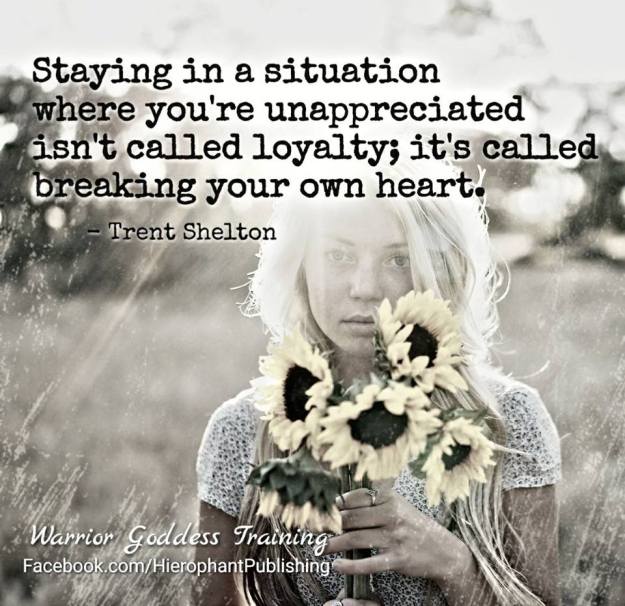
Although it’s challenging, we need to be honest with ourselves and grounded in reality. There’s simply no more chances for people or situations that diminish you.
So glad I ran into this article today! I hope it’s helpful to other people out there. I’ve been in and out of a few relationships, and when I’m alone I’ve noticed this slight twinge inside that I NEED to be part of a couple, because that’s what humans DO. I know intellectually that this isn’t the truth, but I still run into it sometimes… the following article is a good cure for that type of thinking:
“Be Alone Until You Find Someone Who Actually Gives A Shit About You
Being alone is not scary, or bad, or a curse, or any other bullshit thing that people make it out to be. Being alone is also not lonely, unless you make it lonely.
Being alone is better than settling for a bunch of shitty dates that make you feel horrible about yourself or waking up next to some dude who thinks your name is Whitney when it’s not even close. Being alone is the time you have to get comfortable with yourself and that time is so important.
People get so stressed and worked up about being alone when there is no reason for it at all because being alone is as good or as bad as you make it.
Be alone until you find someone who doesn’t just say they will show up but actually shows up and shows up excited to see you. Be alone until you find someone who doesn’t make endless excuses and actually wants to spend time with you doing the things you want to do.
Be alone until you find someone who talks about you and who talks you up to their friends, or family, or coworkers, or the homeless dude on the street corner – literally anyone. Be alone until you find someone who is proud as hell to show you off because anything less than that is bullshit.
Be alone until you find someone who can’t wait to see you but not in an overbearing pushy, controlling manner but in an “I care about you” manner because yes, there is a difference between the two. And no, being with someone who controls you is not cool.
Be alone until you find someone you actually want to spend your free time with not someone you’re convincing yourself you like or worse – someone you have to convince to like you. Someone whose attention you have to beg for is not someone who is worth your time. If someone likes you, you will know otherwise it’s time to let them go and focus more on yourself.Be alone until you find someone who misses you when you’re not around, not someone who forgets you exist on the weekends unless they’re drunk and lonely. Be alone until you find someone who actually gives a shit about the way you feel. Not someone who says “oh well, you’ll forgive me later” or just expects you to get over it. Be alone until you find someone who doesn’t ghost you or leave you hanging more often than not.
Be alone until you find someone who is proud of you, who inspires you, who wants you to be better and wants to help you get there. Be alone until you find someone who erases your insecurities and makes you feel good in your own skin. Be alone until you find someone who puts you first and makes you feel like a priority because you don’t have time to be an option.
Be alone until you find someone who actually gives a shit about you. So many people settle for mediocre relationships with lame ass people – don’t be one of those people. Love is the one thing you should never, ever settle for.
Until then – be alone. You will thank yourself for doing so.”
Anita Pallenberg passed away today at 73 years old. What an incredible woman. She was Keith Richards’ first wife and was the muse of The Rolling Stones at their birth in the 1960’s. She was one of those rare women with intelligence, beauty, magnetism and an adventurous spirit. She was completely her own person and fearlessly walked her path. The perfect example of a woman living her life to the fullest.
I greatly admired her as a teenager and read about her all the time. I never wanted to be like the movie stars of the late 70’s – I wanted to be like Anita: independent, confident and exotic. She was the heart and spirit of The Rolling Stones – the REAL badass.
Anita Pallenberg, the model, actress, perennial style icon, perpetual fashion reference, and perhaps rock and roll’s most famous muse passed away today, at age 73. The news was made public on Instagram this afternoon by Stella Schnabel. “I have never met a woman quite like you Anita,” she wrote. “I don’t think there is anybody in this universe like you. No one has ever understood me so well. You showed about life and myself and how to grow and become and exist with it all. I was a little girl thinking I was big but I became a woman through knowing you. The secret lyrical you. My best friend. The greatest woman I have ever known. Thank you for the most important lessons – because they are ever changing and definitive. Like you. We are all singing for you, how you liked it. Go in peace my Roman mother, you will always be in my heart.”
Pallenberg, who Marianne Faithfull once called “the most incredible woman I’d met in my life” as well as “dazzling, beautiful, hypnotic and unsettling” was famously charming— John Phillips once described her as possessing “an unmistakable electrical charge,” though she described herself as “a vagabond. An adventurer… not a person with one specific talent. I wish I was.” She spent the 1960s as an in-demand model and an actress, appearing in films like Barbarella, Performance, and Candy, with Marlon Brando. German-Italian, Pallenberg had social ties that stretched from the Dolce Vita set in Rome to Andy Warhol’s factory, and rose to international fame as part of the impossibly glamorous ultra-bohemian traveling troupe of ur-rock royalty. She certainly left a lasting impression on Keith Richards, who recalled that “she knew everything and she could say it in five languages. She scared the pants off me!” They would later have three children together.
Pallenberg first entered the Rolling Stones’ orbit as Brian Jones’ girlfriend before later taking up with Richards (as well as Mick Jagger, this being the 1970s). “How Anita came to be with Brian is really the story of how the Stones became the Stones,” Faithfull wrote in her 1994 autobiography, Faithfull, “She almost single-handedly engineered a cultural revolution in London by bringing together the Stones and the jeunesse dorée…The Stones came away with a patina of aristocratic decadence that served as a perfect counterfoil to the raw roots blues of their music. This…transformed the Stones from pop stars into cultural icons.” She also had an unmistakable affect on the way that rock and roll looked: in his 2010 autobiography Life, Richards recounts that his way of getting dressed during that era was to slip into Pallenberg’s pants. Her allure, however, far transcended her wardrobe: “Other women evaporated next to her. She spoke in a baffling dada hipsterese. An outlandish Italo-Germanic-Cockney slang that mangled her syntax into surreal fragments….It was all part of her sinister appeal,” wrote Faithfull. All this enticed Keith, who wrote in Life, “I like a high-spirited woman. And with Anita, you knew you were taking on a Valkyrie—she who decides who dies in battle.” Their tumultuous relationship (marked by their shared struggles with substance abuse) would eventually come to an end in the early 1980s.
In 1994, Anita earned a fashion degree at Central Saint Martins and briefly worked with Vivienne Westwood, though she eventually left the industry behind, calling it “too nasty, too rip-off, too hard.” She scorned suggestions of a tell-all style biography, telling The Guardian in 2008 that “publishers want to hear only about the Stones and more dirt on Mick Jagger and I’m just not interested….I had several publishers and they were all the same. They all wanted salacious.” Ultimately, it seems, she was never interested in being anything but herself. “I am ready to die,” she told Alain Elkann in August 2016, “I have done so much here. My Mum died at 94. I don’t want to lose my independence. Now I am over 70 and to be honest I did not think I would live over 40.”
She is survived by her children, Marlon and Angela, and her grandchildren.
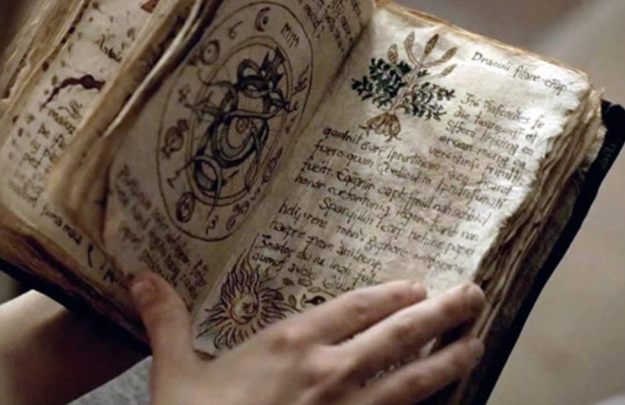
“The Arbatel de magia veterum (Arbatel: Of the Magic of the Ancients) is a Renaissance-period grimoire – a textbook of magic – and one of the most influential works of its kind. Unlike some other occult manuscripts that contain dark magic and malicious spells, the Arbatel contains spiritual advice and guidance on how to live an honest and honorable life.”
“The Arbatel is claimed to have been written in 1575 AD. This date is supported through textual references dating from 1536 through 1583. It is believed that the final editor of the Arbatel was Swiss physician Theodor Zwinger, and that it was published by Italian printer Pietro Perna. The author remains unknown, although it has been speculated that a man named Jacques Gohory may be the author. Like Zwinger and Perna, Gohory was a Paracelsian (a group who believed in and followed the medical theories and therapies of Paracelsus).
The focus of the Arbatel is on nature, and the natural relationships between humanity and a celestial hierarchy. It centers on the positive relationships between the celestial world and humans, and the interactions between the two. British poet and scholarly mystic Arthur Edward Waite (A.E. Waite) noted that the Arbatel is clearly Christian in nature. He wrote that it does not contain any form of black magic, and that it is not connected to the Greater or Lesser Keys of Solomon, which were focused on demonology.
The most frequently cited book in the Arbatel is the Bible. In the manner it is written, it appears that the author of the Arbatel must have had many portions of the Bible memorized, and that this highly influenced his writings.
The Arbatel was an extremely influential work for its time. It is said that one cannot understand the meaning of the Arbatel without also understanding the philosophy of Paracelsus. It viewed theosophy in an occult sense, and was perhaps the first written work to do so. Prior to the Arbatel, theosophy was generally used as a synonym for theology. It was the first writing to make the important distinction between human knowledge and divine knowledge.
Not all views of the Arbatel are positive, however. Dutch physician, occultist and demonologist Johann Weyer condemned the Arbatel as being “full of magical impiety” in his book, De praestigiis daemonum. In 1617, two professors at the University of Marburg in Germany intended to use the Arbatel as a textbook for students. Actions were taken against those professors by the University, and the book led to a student’s expulsion. Further, in 1623, an individual accused of being a witch, Jean Michel Menuisier, claimed to have used incantations from the Arbatel.
The first edition was most likely published in Basel. Some claim there had been earlier editions, although there has been no evidence to substantiate this. Since 1575, there have been several reprints. In 1655, Robert Turner translated the Arbatel to English, and printed it in his “Fourth” book of Heinrich Cornelius Agrippa’s “Three Books of Occult Philosophy.” In 1686, Andreas Luppius wrote a German translation of the Arbatel, and in 1855, Scheible completed another German translation, correcting Luppius’ errors. In 1945, Marc Haven created a French translation of the manuscript. Finally, in 1969, it was translated again into English in the British Library’s Sloane Manuscripts. This English translation resulted in many errors and missing sections, and included a “Seal of Secrets” not included in any other version.
Through its original edition and later translations, the Arbatel remains a fascinating look into ancient spiritual advice, and the different philosophies and views of the world from the 16th Century.”
Venus and Uranus were in an exact conjunction at 27 Aries yesterday. This noteworthy event happens every 225 days, and brings a fresh perspective to our personal relationships. Breakthroughs are common – both good and bad – and can show up the week preceding and the week following the aspect. So yeah, this new week upon us could reveal surprises and changes that can be challenging (but illuminating in the long run). Change is in the air.
So, how was your weekend? Did any shifts or insights occur on Saturday? The area where 27 Aries resides in your personal chart is where you will feel the effects most powerfully.
I had a funny, related experience. On my way to an event I passed an easy chair and a television in the middle of a street. They look like they had been thrown there by a strong force (Aries). Venus rules comfort and pleasure (i.e. the chair) and Uranus rules electricity and television (i.e. the TV). I wish now I had taken a picture of it!
Trust yourself. Create the kind of self that you will be happy to live with all your life. Make the most of yourself by fanning the tiny, inner sparks of possibility into flames of achievement. – Golda Meir