Category Archives: Psychology

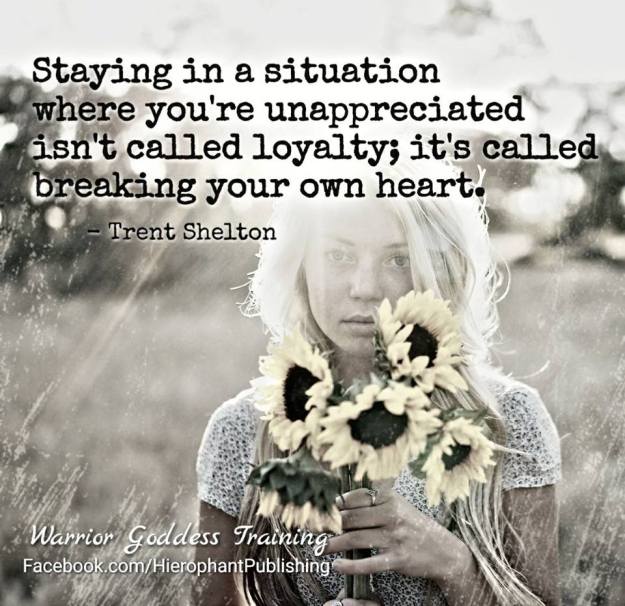
What self care really means

2013-09-19-5-things-you-need-to-know-about-b12-deficiency-foods


Excellent insight about self care. I often advise people in my practice to abide by H.A.L.T.S.: Hungry, Angry, Lonely, Tired, Sick. If you have any one of these needs, address it immediately before making big decisions.

But there’s more to it!

Check out this article by Brianna Wiest:

This Is What ‘Self-Care’ REALLY Means, Because It’s Not All Salt Baths And Chocolate Cake


“True self-care is not salt baths and chocolate cake, it is making the choice to build a life you don’t need to escape from!

…and that often takes doing the thing you don’t want to do.”

“Self-care is often a very unbeautiful thing.

It is making a spreadsheet of your debt and enforcing a morning routine and cooking yourself healthy meals and no longer just running from your problems and calling the distraction a solution.

It is often doing the ugliest thing that you have to do: like sweat through another workout or tell a toxic friend you don’t want to see them anymore, or get a second job so you can have a savings account, or figure out a way to accept yourself so that you’re not constantly exhausted from trying to be everything, all the time…

It often means looking your failures and disappointments square in the eye and re-strategizing. It is not satiating your immediate desires, it is letting go. It is choosing NEW. It is disappointing some people. It is making sacrifices for others. It is living a way that other people won’t, so maybe you can live in a way that other people can’t.

It is letting yourself be normal. Regular. Unexceptional. It is sometimes having a dirty kitchen and deciding your ultimate goal in life isn’t going to be having abs and keeping up with your fake friends. It is deciding how much of your anxiety comes from not actualizing your latent potential, and how much comes from the way you were being trained to think before you even knew what was happening.”

https://thoughtcatalog.com/brianna-wiest/2017/11/this-is-what-self-care-really-means-because-its-not-all-salt-baths-and-chocolate-cake/

Do this when you feel icky

PUG

“What Science Really Says About Negative Emotions.

Pretending unwelcome feelings don’t exist isn’t helping. Here’s what to do instead:

by Shelby Lorman.

Source.

Ever been told to smile when you’re feeling down? While there’s science to support the idea that forced positivity can temporarily boost your mood, convincing yourself that you’re always happy may do you more harm than good, according to an insightful piece on Quartz by Lila MacLellan. Research suggests suppressing your less-than-pleasant feelings can harm your psychological well-being, and that accepting them is a better option.
Acceptance isn’t about making peace with your negative emotions: the “magic of acceptance is in its blunting effect on emotional reactions to stressful events,” Brett Ford, a psychology professor at the University of Toronto, told MacLellan. Ford added that over time, acceptance of negative emotions can lead to “positive psychological health, including higher levels of life satisfaction.”
How and why this happens isn’t exactly clear. But Ford’s recently published research (in the Journal of Personality and Social Psychology) offers some insights. The research is from a few years ago, when Ford was a doctoral student at the University of California, Berkeley. She and a few other Berkeley researchers designed a three-part experiment in hopes of learning more about the link between acceptance and psychological well-being. The participants were from various socioeconomic backgrounds and races, and included people who had dealt with major and minor negative experiences (think the difference between losing a job and losing track of your keys).
Ford and her fellow researchers found that people who were more accepting of negative emotions (MacLellan calls them “habitual acceptors”) like anger or anxiety had reduced feelings of ill-being, something backed up by previous research, and were more likely to have better well-being. MacLellan notes that “accepting dark emotions like anxiety or rage won’t bring you down or amplify the emotional experience. Nor will it make you ‘happy’—at least not directly.” Instead, acceptance is linked to overall “better mental health when it’s used in response to negative emotions, not positive ones,” MacLellan writes.
Ford hopes her research can improve future mental health treatments, which “currently rely on some approaches that fail people,” she told MacLellan. “When something happens and you try to reframe it like, ‘Oh it’s not such a big deal.’ or ‘I’m going to learn and grow from that,’ it doesn’t necessarily work,” Ford said.
Bad experiences are inevitable. But if we only let in the positive emotions, we’re less equipped to deal with the rollercoaster ride that is just part and parcel of being alive. “People die in our lives, we lose them, if we have only been accustomed to being allowed to have more positive thoughts, then these realities can strike us even more intensely when they happen—and they will happen,” according to Svend Brinkmann, a psychology professor at Denmark’s Aalborg University quoted in the piece.
Part of the challenge of acceptance is that it runs counter to our culture’s expectation to be happy all of the time. We’re living in a “cultural age that’s decidedly pro-positivity,” MacLellan writes, which makes the “pressure to suppress or camouflage negative feelings” all the more pronounced. In the West (especially in the U.S.) “happiness and positivity are seen as virtues,” MacLellan notes. Ford told her that “some companies want their customers and employees to be delighted all the time. That’s unreasonable, and when we’re faced with unreasonable expectations, it’s natural for us to start applying judgement to the negative mental experiences we have.”
This probably isn’t helped by the fact that social media today is awash in well-curated and filtered frames of positivity. While a quick mood boost might feel great, continually suppressing our own negative emotions in favor of feel-good things only sets us up for a “striving state of mind,” according to Ford, which is paradoxical to finding peace and acceptance.
The good news is that acceptance can be learned. You can start by thinking of “your emotions as passing clouds, visible but not a part of you,” MacLellan suggests. Next time you experience a negative emotion or feel pressured to smile when you’re really not feeling it, remember that, as Ford explains, “acceptance involves not trying to change how we are feeling, but staying in touch with your feelings and taking them for what they are.”
Read more on Quartz.

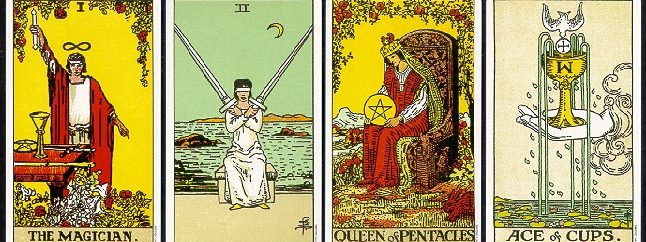
Carl Jung: Tarot Cards Provide Doorways to the Unconscious

Rider-Waite-1

Interesting article on a lecture by Jung regarding the use of the tarot. I wholeheartedly agree with most of what I read here. I’ve been using tarot cards for guidance for years, and they’ve been the cornerstone of my business since I started 10 years ago. They absolutely transport a person into a different level of consciousness – one that reveals the inner workings of our minds and the mysteries of our life path.

Read on…

“…As Mary K. Greer explains, in a 1933 lecture Jung went on at length about his views on the Tarot, noting the late Medieval cards are “really the origin of our pack of cards, in which the red and the black symbolize the opposites, and the division of the four—clubs, spades, diamonds, and hearts—also belongs to the individual symbolism.

They are psychological images, symbols with which one plays, as the unconscious seems to play with its contents.” The cards, said Jung, “combine in certain ways, and the different combinations correspond to the playful development of mankind.” This, too, is how Tarot works—with the added dimension of “symbols, or pictures of symbolical situations.” The images—the hanged man, the tower, the sun—“are sort of archetypal ideas, of a differentiated nature.”

Thus far, Jung hasn’t said anything many orthodox Jungian psychologists would find disagreeable, but he goes even further and claims that, indeed, “we can predict the future, when we know how the present moment evolved from the past.” He called for “an intuitive method that has the purpose of understanding the flow of life, possibly even predicting future events, at all events lending itself to the reading of the conditions of the present moment.” He compared this process to the Chinese I Ching, and other such practices. As analyst Marie-Louise von Franz recounts in her book Psyche and Matter:

Jung suggested… having people engage in a divinatory procedure: throwing the I Ching, laying the Tarot cards, consulting the Mexican divination calendar, having a transit horoscope or a geometric reading done.

Content seemed to matter much less than form. Invoking the Swedenborgian doctrine of correspondences, Jung notes in his lecture, “man always felt the need of finding an access through the unconscious to the meaning of an actual condition, because there is a sort of correspondence or a likeness between the prevailing condition and the condition of the collective unconscious.”

What he aimed at through the use of divination was to accelerate the process of “individuation,” the move toward wholeness and integrity, by means of playful combinations of archetypes. As another mystical psychologist, Alejandro Jodorowsky, puts it, “the Tarot will teach you how to create a soul.” Jung perceived the Tarot, notes the blog Faena Aleph, “as an alchemical game,” which in his words, attempts “the union of opposites.” Like the I Ching, it “presents a rhythm of negative and positive, loss and gain, dark and light.”

Full Article: http://www.openculture.com/2017/08/carl-jung-tarot-cards-provide-doorways-to-the-unconscious-and-even-a-way-to-predict-the-future.html


Alejandro Jodorowsky Explains How Tarot Cards Can Give You Creative Inspiration

https://youtu.be/mqnVKr9hf4A


Excellent article and video on the tarot by Alejandro Jodorowsky.

“The practice of cartomancy, or divination with cards, dates back several hundred years to at least 14th century Europe, perhaps by way of Turkey. But the specific form we know of, the tarot, likely emerged in the 17th century, and the deck we’re all most familiar with—the Rider-Waite Tarot—didn’t appear until 1909. Popular mainly with occultists like Aleister Crowley and Madame Blavatsky in the early 20th century, the tarot exploded into popular culture in the new age 70s with books like Stuart Kaplan’s Tarot Cards for Fun and Fortune Telling, and by way of cult filmmakers like Alejandro Jodorowsky.

jodoCARDS

Since its relatively recent popularization, “fun” and “fortune telling” have more or less defined most people’s attitude to the tarot, whether they approve or disapprove of either one. But for artists and poets like William Butler Yeats, T.S. Eliot, and surrealist director Jodorowsky—whose film narration is perhaps the most poetic in modern cinema—the tarot has always meant something much more mysterious and inspiring. “The tarot,” says Jodorowsky in the short film above, “will teach you how to create a soul.”

After studying the Major and Minor Arcana and the suits, and puzzling over the symbols on each card, Jodorowsky discovered that “all 78 cards could be joined in a mandala, in just one image.” Learning to see the deck thus, “You must not talk about the future. The future is a con. The tarot is a language that talks about the present. If you use it to see the future, you become a conman.” Like other mystical poets, Jodorowsky’s study of the tarot did not lead him to the supernatural but to the creative act.

And like many a poet before him, Jodorowsky explored the journey of the Fool in his 1973 film The Holy Mountain, a “dazzling, rambling, often incoherent satire,” writes Matt Zoller Seitz, that “unfurls like a hallucinogenic daydream.” Jodorowsky’s cinematic dream logic comes not only from his work as a “shamanic psychotherapist.” He also credits the tarot for his psychomagical realism. “For me,” says Jodorowsky in the video at the top, “the tarot was something more serious. It was a deep psychological search.” The result of that search—Jodorowsky’s singular and totally unforgettable body of work—speaks to us of the value of such an undertaking, whatever means one uses to get there.

Or as Jodorowsky says in one of his mystical pronouncements, “If you set your spirit to something, that phenomenon will happen.” If that sounds like magical thinking, that’s exactly what it is. Jodorowsky shows us how to read the tarot as he does, for psychological insight and creative inspiration, in the video above, addressed to a fan named John Bishop. Spanish speakers will have no trouble understanding his presentation, as he quickly slides almost fully into his native language through lack of confidence in his facility with English. (The video belongs to a series on Jodorowsky’s YouTube channel, most of them fully in Spanish without subtitles.) Selecting a translation on YouTube yields rather garbled results.”

Read more: Article

Biological Influence


une-maman-et-son-bebe-ouran-outang

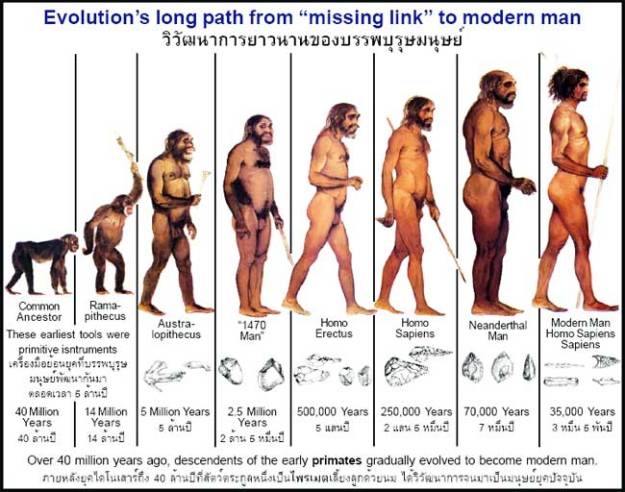
I stumbled across an episode of Forum with Stanford neuroscientist Robert Sapolsky the other day, and the show was so stunning I HAVE to share it. The influence of our biology on our decision-making is profound, and I find it fascinating.

Apparently, our brains are wired to become aggressive and angry when we’re fearful; to default into “us and them” mentality (which causes a host of social problems), and to make decisions based purely on smell and hunger. You gotta listen to it. We are homo sapiens. It’s so easy to forget while running our errands, getting to work on time, raising our kids. But WE ARE ANIMALS, and our biological impulses have a HUGE influence on our behavior.

Dr. Robert Sapolsky is a professor of biology and neurology at Stanford University, and has spent a lot of his life around primates and studying their behaviors. He finds interesting correlations with human behavior, and discusses them at length in his new book “Behave: The Biology of Humans at Our Best and Worst”.

Here’s the audio of the show. It really takes off eight minutes in… let me know what you think!

48d709558f5cf7ca81e02bd7c3720c7e

Love inSight

So glad I ran into this article today! I hope it’s helpful to other people out there. I’ve been in and out of a few relationships, and when I’m alone I’ve noticed this slight twinge inside that I NEED to be part of a couple, because that’s what humans DO. I know intellectually that this isn’t the truth, but I still run into it sometimes… the following article is a good cure for that type of thinking:

respect

“Be Alone Until You Find Someone Who Actually Gives A Shit About You

Article: http://thoughtcatalog.com/becca-martin/2017/06/be-alone-until-you-find-someone-who-actually-gives-a-crap-about-you/

Being alone is not scary, or bad, or a curse, or any other bullshit thing that people make it out to be. Being alone is also not lonely, unless you make it lonely.

Being alone is better than settling for a bunch of shitty dates that make you feel horrible about yourself or waking up next to some dude who thinks your name is Whitney when it’s not even close. Being alone is the time you have to get comfortable with yourself and that time is so important.

People get so stressed and worked up about being alone when there is no reason for it at all because being alone is as good or as bad as you make it.

Be alone until you find someone who doesn’t just say they will show up but actually shows up and shows up excited to see you. Be alone until you find someone who doesn’t make endless excuses and actually wants to spend time with you doing the things you want to do.

Be alone until you find someone who talks about you and who talks you up to their friends, or family, or coworkers, or the homeless dude on the street corner – literally anyone. Be alone until you find someone who is proud as hell to show you off because anything less than that is bullshit.

Be alone until you find someone who can’t wait to see you but not in an overbearing pushy, controlling manner but in an “I care about you” manner because yes, there is a difference between the two. And no, being with someone who controls you is not cool.

Be alone until you find someone you actually want to spend your free time with not someone you’re convincing yourself you like or worse – someone you have to convince to like you. Someone whose attention you have to beg for is not someone who is worth your time. If someone likes you, you will know otherwise it’s time to let them go and focus more on yourself.Be alone until you find someone who misses you when you’re not around, not someone who forgets you exist on the weekends unless they’re drunk and lonely. Be alone until you find someone who actually gives a shit about the way you feel. Not someone who says “oh well, you’ll forgive me later” or just expects you to get over it. Be alone until you find someone who doesn’t ghost you or leave you hanging more often than not.

Be alone until you find someone who is proud of you, who inspires you, who wants you to be better and wants to help you get there. Be alone until you find someone who erases your insecurities and makes you feel good in your own skin. Be alone until you find someone who puts you first and makes you feel like a priority because you don’t have time to be an option.

Be alone until you find someone who actually gives a shit about you. So many people settle for mediocre relationships with lame ass people – don’t be one of those people. Love is the one thing you should never, ever settle for.

Until then – be alone. You will thank yourself for doing so.”

Alanon meditation

ToolMe

The Language of Letting Go” is one of my favorite books of wisdom. Today’s sentiment really resonates with me, and I want to share it 🙂

Happy Monday!

Powerlessness and Unmanageability

“Willpower is not the key to the way of life we are seeking. Surrender is.

“I have spent much of my life trying to make people be, do, or feel something they aren’t, don’t want to do, and choose not to feel. I have made them, and myself, crazy in that process,” said one recovering woman.

I spent my childhood trying to make an alcoholic father who didn’t love himself be a normal person who loved me. I then married an alcoholic and spent a decade trying to make him stop drinking.

I have spent years trying to make emotionally unavailable people be emotionally present for me. I have spent even more years trying to make family members, who are content feeling miserable, happy.

What I’m saying is this: I’ve spent much of my life desperately and vainly trying to do the impossible and feeling like a failure when I couldn’t. It’s been like planting corn and trying to make the seeds grow peas. Won’t work!

By surrendering to powerlessness, I gain the presence of mind to stop wasting my time and energy trying to change and control that which I cannot change and control. It gives me permission to stop trying to do the impossible and focus on what is possible: being who I am, loving myself, feeling what I feel, and doing what I want to do with my life.

In recovery, we learn to stop fighting lions, simply because we cannot win. We also learn that the more we are focused on controlling and changing others, the more unmanageable our life becomes. The more we focus on living our own life, the more we have a life to live, and the more manageable our life will become.

Today, I will accept powerlessness where I have no power to change things, and I’ll allow my life to become manageable.”

It’s not what you think

Fantastic insights depression and the death of Chris Cornell. I also found this study that links addiction to childhood trauma:

http://upliftconnect.com/addiction-is-a-response-to-childhood-suffering/

IF YOU ARE STRUGGLING, PLEASE GET HELP. Asking for help doesn’t mean you’re weak, it’s a way of taking care of yourself and the people that love you.

The Next Ten Words's avatarThe First Ten Words by Rich Larson

Chris Cornell, 1964-2017

Chris Cornell died early Thursday morning. His band Soundgarden played a show on Wednesday night at the Fox Theater in Detroit. Two hours after the show ended, he was gone.

For two days, I’ve been working on a piece to pay tribute to him, and it’s been a struggle. Usually when I have a problem like this it’s because I’m staring at a blank screen trying to figure out what I want to say. That’s not the problem this time. The problem is I have way too much to say.

I’m not going to sit here and claim to have been a huge fan of Soundgarden. I didn’t dislike them, I just had to take them in small doses. I was a fan of Cornell. I love “Seasons,” the solo song he had on Cameron Crowe’s movie, Singles. It’s a droning acoustic song about isolation and the…

View original post 1,488 more words

Narcissism

18118882_1736993819923968_5997707982692340208_n

Excellent article about being in a relationship with a narcissist. I’ve experienced this in my life and I feel lucky I broke free. This is great information that everyone should be aware of:

The Narcissist’s One Trick That Can Keep Us Hooked Forever.

By  | Textbook Narcissism :

“It’s the powerful emotional tool known as intermittent reinforcement, and when used correctly, it guarantees to get—and keep—virtually anyone hooked on anything.

Intermittent reinforcement is when one person in a relationship metes out or reinforces rules, rewards or boundaries occasionally or inconsistently. Instead of discouraging the other person, intermittent reinforcement actually does the opposite. It fuels their attempts to extract the reward once again, keeping them hopelessly locked onto the relationship.

Take for example a parent who says “no” to their child 90% of the time. It’s the 10% of the time the parent backtracks, which incites the child to whine, throw tantrums, or harangue to get another yes. Animals will do tricks every time, even after the trainer withholds the reward, like B.F. Skinner’s rat that hits the bar repeatedly for the chance pellet, over and over, whether it gets one or not. Gamblers, too, know that the intermittent reinforcement of the random, small pay out, will keep them at the slot machines until they empty their purses or pockets.

Those of you obsessed with checking your Tinder account, Tumblr blog, or Twitter, for the ambivalent thrill that comes with those hit-or-miss shots of validation, know what I’m talking about.

The narcissist knows what I’m talking about too. He is adroit at delivering a ping of validation when he senses you’re about to pull away, just to keep you tied to a relationship that serves his needs, usually at your expense.

It’ll be bad bad bad bad, but then all of a sudden good, and you are fooled into thinking good is here to stay. So you stay too. And like Skinner’s rat that starved to death in pursuit of the ever-diminishing, random reward, chances are you too will tolerate increasingly abusive conditions in the hope of catching hold again of a (brief) encounter with good.

But with a narcissist, the good is fleeting by design. That’s intermittent reinforcement.

Source: http://educateinspirechange.org/alternative-news/narcissists-one-trick-can-keep-us-hooked-forever/

If you’ve ever been stuck in the sticky grip of a narcissist, you know the drill. When the two of you first meet, the narcissist floods you with expressions of love. You are beautiful, witty, enchanting, the woman he’s always wanted but didn’t think existed. His search is over. Your shoulders relax, you let down your walls, throw open the gates. Your heart sings. You let yourself believe you’ve finally found the one.

Then, without warning, the narcissist switches tracks. Out of nowhere, you can’t do anything right. The qualities in you that she first exalted, are now your worst faults. She’s bored with you, disinterested. She starts to mention other guys, her old boyfriend. You think, what happened? You review everything she said, examining past events for clues that she really cared. Let’s see, she went to my hockey games, came with me to visit my mom in the hospital. Stuck love notes in my gym bag. Didn’t all that mean she loved me? What happened? Is it me?

No. It’s not you. You’re just caught in the narcissist cycle. The D&D, devalue and discard phase. The narcissist practice of projecting their internalized self-hate and disdain onto you, by doing and saying things to make you feel invalidated, rejected, and insecure.

Most of us with even a shot glass of self-esteem get hip to this, and decide to say sayonara. That’s when the narcissist will employ the emotional hook: Intermittent reinforcement. To keep you from exiting, the narcissist will do an about face, and signal you’re back in. He’s on time, attentive, he brings your favorite take out, remembers it’s your dog’s birthday. He takes you in his arms, the clouds part, and the light of his love shines down on you once more. You exhale with relief.

It won’t last. Doesn’t matter. Most of us will cleave to those haphazard disbursements as evidence that a loving, reciprocal relationship is still possible. After the investment we’ve made in the narcissist, we’re already set up to seize on reasons to ignore the bad stuff. So we hang in, continue to chase the good. The narcissist delivers her well-timed, little ping. We’re hooked.

The problem is, over time, the episodes of intermittent reinforcement get fewer and fewer, and the incidents of D&D increase. But the pain of D&D will never loosen the hook, as long as the narcissist continues to fall back on intermittent reinforcement. The only way to get free, is to adopt a strict no contact policy. The sooner the narcissist becomes a memory, the better off you’ll be.”