The ancient symbol of a snake eating it’s tail touches every culture on our planet. Here’s a fun (but incomplete) journey into the history of this magical symbol by Ellie Crystal:
“The Ouroboros is believed to have been inspired by the Milky Way.

Ancient texts refer to a serpent of light residing in the heavens

which, according to Ancient Alien Theory, was a spaceship or stargate.
Mythology: The Milky Way galaxy keeps a time cycle that ends in catastrophic change when the serpent eats its tail (at the end of the tale of this reality.) Suntelia Aion is the sun rising out of the mouth of the ouroboros, which allegedly occurs December 21, 2012 – representing the evolution of consciousness in the alchemy of time.


The Ouroboros and the Tree of Life
Origins of the Ouroboros
Egypt

Papyrus of Dama Heroub Egypt, 21st Dynasty
The serpent or dragon eating its own tail has survived from antiquity and can be traced back to Ancient Egypt, circa 1600 B.C.E. It is contained in the Egyptian Book of the Netherworld. The Ouroboros was popular after the Amarna period.
In the Book of the Dead, which was still current in the Graeco-Roman period, the self-begetting sun god Atum is said to have ascended from chaos-waters with the appearance of a snake, the animal renewing itself every morning, and the deceased wishes to turn into the shape of the snake Sato (“son of the earth”), the embodiment of Atum.
The famous Ouroboros drawing from the early alchemical text The Chrysopoeia of Cleopatra dating to 2nd century Alexandria encloses the words hen to pan, “one is the all”. Its black and white halves represent the Gnostic duality of existence. As such, the Ouroboros could be interpreted as the Western equivalent of the Taoist Yin-Yang symbol. The Chrysopoeia Ouroboros of Cleopatra is one of the oldest images of the Ouroboros to be linked with the legendary opus of the Alchemists, the Philosopher’s Stone.
Greece

Plato described a self-eating, circular being as the first living thing in the universe – an immortal, mythologically constructed beast. The living being had no need of eyes when there was nothing remaining outside him to be seen; nor of ears when there was nothing to be heard; and there was no surrounding atmosphere to be breathed; nor would there have been any use of organs by the help of which he might receive his food or get rid of what he had already digested, since there was nothing which went from him or came into him: for there was nothing beside him.
Of design he was created thus, his own waste providing his own food, and all that he did or suffered taking place in and by himself. For the Creator conceived that a being which was self-sufficient would be far more excellent than one which lacked anything; and, as he had no need to take anything or defend himself against any one, the Creator did not think it necessary to bestow upon him hands: nor had he any need of feet, nor of the whole apparatus of walking; but the movement suited to his spherical form was assigned to him, being of all the seven that which is most appropriate to mind and intelligence; and he was made to move in the same manner and on the same spot, within his own limits revolving in a circle.
All the other six motions were taken away from him, and he was made not to partake of their deviations. And as this circular movement required no feet, the universe was created without legs and without feet. In Gnosticism, this serpent symbolized eternity and the soul of the world.
Middle East

Because the Albigenses came from Armenia, where Zoroastrianism and Mithra worship were common, it may be that the symbol entered their iconography via the Zoroastrian Faravahar symbol, which in some versions clearly features an ouroboros at the waist instead of a vague disc-shape.
In Mithran mystery cults the figure of Mithra being reborn (one of the things he is famous for) is sometimes seen wrapped with an ouroboros, indicating his eternal and cyclic nature, and even references which do not mention the ouroboros refer to this circular shape as symbolizing the immortality of the soul or the cyclic nature of Karma, suggesting that the circle retains its meaning even when the details of the image are obscured.

The Double Triangle of Solomon
India

Ouroboros symbolism has been used to describe Kundalini energy. According to the 2nd century Yoga Kundalini Upanishad, “The divine power, Kundalini, shines like the stem of a young lotus; like a snake, coiled round upon herself she holds her tail in her mouth and lies resting half asleep as the base of the body” (1.82). Another interpretation is that Kundalini equates to the entwined serpents of the Caduceus, the entwined serpents representing commerce in the west or, esoterically, human DNA.
The Kirtimukha myth of Hindu tradition has been compared by some authors to Ouroboros.
Ouroboros… the dragon circling the tortoise which supports the four elephants that carry the world.
China
 Chinese Ouroboros from Chou dynasty, 1200 BC.
The universe was early divided into Earth below and Heaven above. These, two as one, gave the idea of opposites but forming a unity. Each opposite was assumed to be powerful and so was their final unity. For creation of the universe they projected reproduction to conceive creation. Now reproduction results in the union of two opposites as male and female.
Correspondingly, the Chinese believed Light and Darkness, as the ideal opposites, when united, yielded creative energy. The two opposites were further conceived as matter and energy which became dual-natured but as one. The two opposites were yin-yang and their unity was called Chhi. Yin-Yang was treated separately in Chinese cosmology which consisted of five cosmic elements.
Since Chinese alchemy did reach Alexandria probably the symbol Yin-Yang, as dual-natured, responsible for creation, was transformed into a symbol called Ouroboros. It is a snake and as such as symbol of soul. Its head and anterior portion is red, being the color of blood as soul; its tail and posterior half is dark, representing body.
Ouroboros here is depicted white and black, as soul and body, the two as “one which is all.” It is cosmic soul, the source of all creation. Ouroboros is normally depicted with its anterior half as black but it should be the reverse as shown here. With the name Chemeia taken to Kim-Iya, the last word would take Ouroboros to Yin-Yang.
Mesoamerica
The serpent god Quetzalcoatl is sometimes portrayed biting his tail on Aztec and Toltec ruins. A looping Quetzalcoatl is carved into the base of the Pyramid of the Feathered Serpent, at Xochicalco, Mexico, 700-900 AD.
 Seven-segmented Aztec Ouroboros
Norse

In Norse mythology, it appears as the serpent Jormungandr, one of the three children of Loki and Angrboda, who grew so large that it could encircle the world and grasp its tail in its teeth. In the legends of Ragnar Lodbrok, such as Ragnarssona patter, the Geatish king Herraud gives a small lindworm as a gift to his daughter Pora Town-Hart after which it grows into a large serpent which encircles the girl’s bower and bites itself in the tail. The serpent is slain by Ragnar Lodbrok who marries Pora. Ragnar later has a son with another woman named Kraka and this son is born with the image of a white snake in one eye. This snake encircled the iris and bit itself in the tail, and the son was named Sigurd Snake-in-the-Eye.
Rome

Earthly Ouroboros from Alciato‘s Emblems

Oceanic Ouroboros from Alciato’s Emblems

Janus 1608
Freemasonry

The ouroboros is displayed on numerous Masonic seals,
frontispieces and other imagery, especially during the 17th century.
Theosophical Society

The Ouroboros is featured in the seal of the Theosophical Society
along with other traditional symbols.
Tarot and Watermarks


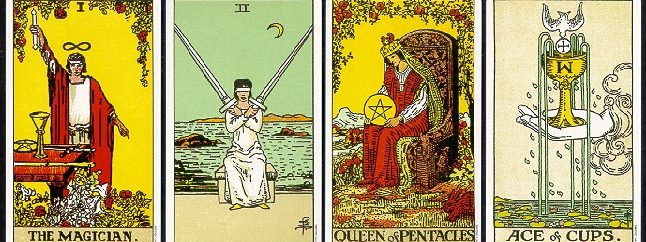
The Ouroboros symbol appears in both 14th- and 15th-century Albigensian-printing watermarks and is also worked into the pip cards of many early (14th-15th century) playing cards and tarot cards. Watermarks similar to those used by the Albigensians appear in early printed playing cards, suggesting that the Albigenses might have had contact with the early authors of tarot decks.
A commonly used early symbol – an ace of cups circled by an ouroboros – frequently appears among Albigensian watermarks. It is conceivable that this is the source of some of the urban legends associating this symbol with secret societies, because the Albigenses were closely associated with the humanist movement and the inquisition it sparked.
Alchemy
Alchemically, the ouroboros is also used as a purifying glyph. Ouroboros was and is the name for the Great World Serpent, encircling the Earth.
The word Ouroboros is really a term that describes a similar symbol which has been cross-pollinated from many different cultures. Its symbolic connotation from this owes to the returning cyclical nature of the seasons; the oscillations of the night sky; self-fecundation; disintegration and re-integration; truth and cognition complete; the Androgyny; the primeval waters; the potential before the spark of creation; the undifferentiated; the Totality; primordial unity; self-sufficiency, and the idea of the beginning and the end as being a continuous unending principle.
Ouroboros represents the conflict of life as well in that life comes out of life and death. ‘My end is my beginning.’ In a sense life feeds off itself, thus there are good and bad connotations which can be drawn. It is a single image with the entire actions of a life cycle – it begets, weds, impregnates, and slays itself, but in a cyclical sense, rather than linear.
Thus, it fashions our lives to a totality more towards what it may really be – a series of movements which repeat. “As Above, So Below” – we are born from nature, and we mirror it, because it is what man wholly is a part of. It is this symbolic rendition of the eternal principles that are presented in the Emerald Tablets of Thoth.

The Ouroboros connects the Above and Below

Connection between Man and God
Carl Jung
Swiss psychologist Carl Jung interpreted the Ouroboros as having an archetypal significance to the human psyche. It makes its way into our conscious mind time and time again in varying forms as the basic mandala of alchemy. Jung defined the relationship of the ouroboros to alchemy:
-
‘The alchemists, who in their own way knew more about the nature of the individuation process than we moderns do, expressed this paradox through the symbol of the ouroboros, the snake that eats its own tail. In the age-old image of the ouroboros lies the thought of devouring oneself and turning oneself into a circulatory process, for it was clear to the more astute alchemists that the prima materia of the art was man himself.’
The ouroboros is a dramatic symbol for the integration and assimilation of the opposite, i.e. of the shadow. This ‘feed-back’ process is at the same time a symbol of immortality, since it is said of the ouroboros that he slays himself and brings himself to life, fertilizes himself and gives birth to himself. He symbolizes the One, who proceeds from the clash of opposites, and he therefore constitutes the secret of the prima materia which […] unquestionably stems from man’s unconscious’. (Collected Works, Vol. 14 para.513)
Other References
The Jungian psychologist Erich Neumann writes of it as a representation of the pre-ego “dawn state”, depicting the undifferentiated infancy experience of both mankind and the individual child.
The 19th century German chemist named Kekule dreamed of a snake with its tail in its mouth one day after dosing off. He had been researching the molecular structure of benzene, and was at a stop point in his work until after waking up he interpreted the dream to mean that the structure was a closed carbon ring. This was the breakthrough he needed.
Organic chemist August Kekule claimed that a ring in the shape of Ouroboros that he saw in a dream inspired him in his discovery of the structure of the benzene ring.
… It seems that the Ouroboros is a powerful archetypal symbol, a part of our Spiritus Mundi, the collective unconscious which thrives within each soul.”
Crop Circles


Source: http://www.crystalinks.com/ouroboros.html




 elizabeth rose psychic and tarot