Dancing outside the Museum of Witchcraft and Magic today. Torchlit procession at 5pm and music all evening in the various pubs
https://www.facebook.com/themuseumofbritishfolklore/videos/1534210283259665/
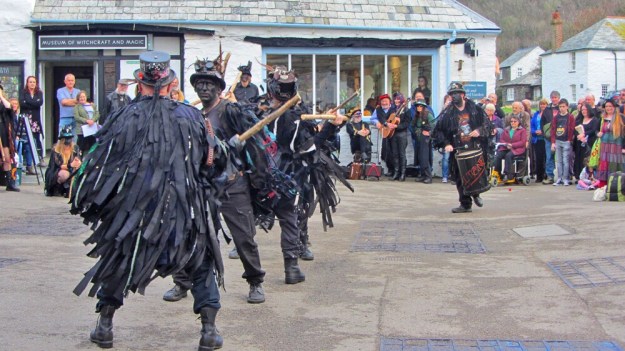
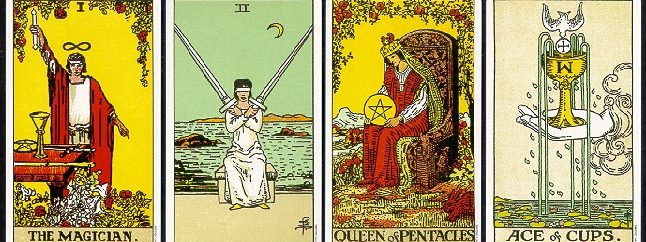
Dancing outside the Museum of Witchcraft and Magic today. Torchlit procession at 5pm and music all evening in the various pubs
https://www.facebook.com/themuseumofbritishfolklore/videos/1534210283259665/
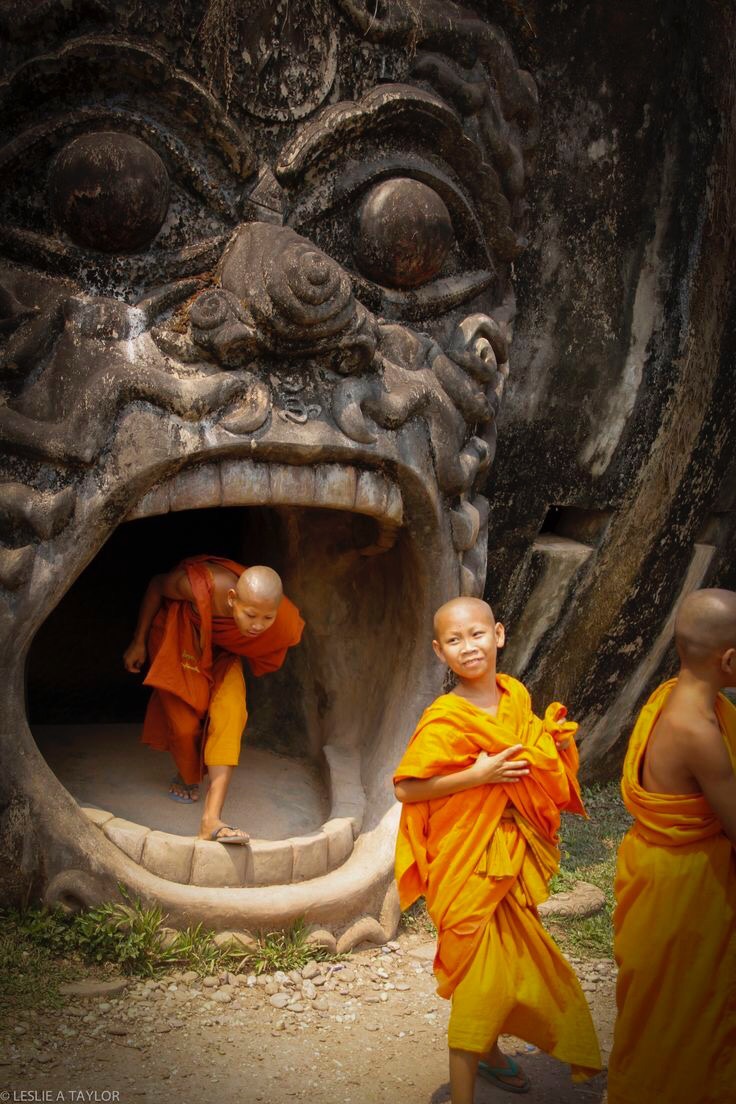
I happened upon this and thought I would share it 🙂 . A lot of these might sound easy, but they are challenging to put into practice!
“How to Communicate Like a Buddhist
BY CYNTHIA KANE
I used to lie awake at night and worry about work, family, friends, boyfriends. Honestly, I would obsess about all of it. And while all these thoughts and emotions were going on inside I rarely expressed any of them. Instead, a colleague would knock on my cubicle while I was in the middle of something and I’d roll my eyes and say in a passive aggressive tone, “what can I do for you now.” Or my boyfriend would ask me to empty the water out of the tea kettle and I’d argue about why leaving it there made sense. Sometimes someone even asking me a simple question like what do you want for lunch would be difficult to answer. There was so much clutter in my head that I couldn’t focus or slow down to express myself accurately. Everything irked me and had me reacting impulsively damaging my relationships. Of course I wanted to interact differently I just didn’t know how.
So I went out and learned everything I could about how to communicate to express myself in a clear, direct, and accurate way. And after years of reading, going to lectures / seminars, and retreats I came up with a practice grounded in the elements of right speech in Buddhism that takes away the clutter, cultivates kind and calm conversations, and helps shift us out of the internal chatter and into the present moment.
Conscious Communication
To speak consciously, clearly, and concisely without anxiety
To respond instead of react
To speak in a way that’s kind, honest, and helpful
To know when to speak and when to stay quiet
To stay engaged when listening
To express yourself so that others can hear you
To nip potential problems in the bud before they become meltdowns
To be comfortable in silence – no longer needing to fill the space”
…and from the Dalai Lama:

Reconstruction of Scythian horse trappings. Type of ornamental covering was found in royal burial mounds.
c. 5th century B.C.
Image source https://www.facebook.com/ostrovkrym.lab

I stumbled across an episode of Forum with Stanford neuroscientist Robert Sapolsky the other day, and the show was so stunning I HAVE to share it. The influence of our biology on our decision-making is profound, and I find it fascinating.
Apparently, our brains are wired to become aggressive and angry when we’re fearful; to default into “us and them” mentality (which causes a host of social problems), and to make decisions based purely on smell and hunger. You gotta listen to it. We are homo sapiens. It’s so easy to forget while running our errands, getting to work on time, raising our kids. But WE ARE ANIMALS, and our biological impulses have a HUGE influence on our behavior.
Dr. Robert Sapolsky is a professor of biology and neurology at Stanford University, and has spent a lot of his life around primates and studying their behaviors. He finds interesting correlations with human behavior, and discusses them at length in his new book “Behave: The Biology of Humans at Our Best and Worst”.
Here’s the audio of the show. It really takes off eight minutes in… let me know what you think!

A strange visual language developed from the 18th to the 20th century behind the closed doors of American secret societies. It’s a languae made up of all-seeing eyes, ominous skulls, hourglasses, arrows, axes, and curious hands holding hearts. Each of these icons was deeply symbolic for the thousands of people — mostly men — who participated in rituals of borrowed meaning, where ancient Egypt, biblical Christianity, and some homegrown amusements like wooden goats on wheels met the rise of American folk art. The American Folk Art Museum’s (AFAM) Mystery and Benevolence: Masonic and Odd Fellows Folk Art from the Kendra and Allan Daniel Collection examines this often hidden history through its arcane artifacts.

Mystery and Benevolence was curated by Stacy C. Hollander, chief curator and director of exhibitions at AFAM, and Aimee E. Newell, director of collections at the Scottish Rite Masonic Museum and Library. It features over 200 objects recently donated to the museum by Kendra and Allan Daniel, who spent three decades buying up the once-secretive art. Installed in the museum, the objects are an exuberant display of the “golden age” of Masonic and Odd Fellows objects, when American decorative and folk art merged with the need for a sense of belonging in the new country.
“After becoming an independent nation in the 1780s, America was seeking to establish its own cultural identity; Freemasonry offered a source of images that resonated with the new nation’s values of equality and liberty,” Newell writes in the accompanying catalogue. “Freemasonry’s visual language and American style began to intersect almost as soon as victory over the British was declared, and continued to adapt as the nation grew and the fraternity evolved. ”
Much of the exhibition contextualizes this long-hidden art in the history of the societies, such as their charity work. The Odd Fellows, formed in 18th-century London, were organized as a benevolent group to support the sick, orphans, and those who died without money for a funeral. One of their mission statements is proclaimed in red and gold on a large wooden sign: “Bury the Dead.” There are also axes indicating how the Odd Fellows saw themselves as “pioneers in the pathway of life”; staffs topped with a heart in the hand were a reminder to be open to others.
Similarly, even the more ghoulish imagery had some meaning connected to charity, and selflessness. The skulls, hourglasses, and skeletons holding shields painted with the word “fidelity” were all reminders of mortality, and how one’s brief time on earth could be better dedicated to others. Reverend Aaron B. Grosh wrote in 1853’s The Odd Fellow’s Manual: “Only the good or evil of our lives will survive us on earth, to draw down on our memories the blessings of those we have aided, or the contempt and reproach of those we have injured.”


“The outward form of each symbol offers a different point of access, but in its context within the lexicon of the fraternity, deeper meanings are revealed to those for whom the symbols are signified,” Hollander writes in the catalogue. “In this, the art of fellowship is not dissimilar to the art of alchemy, its secret knowledge also protected by its practitioners.”

In As Above, So Below: Art of the American Fraternal Society, 1850–1930, recently published by the University of Texas Press, it’s noted that from 1890 to 1915, an “estimated one in five men belonged to at least one society.” Fraternal societies still exist, although their numbers have greatly dwindled. According to the Masonic Service Association of North America, there were 1,211,183 members in 2014.
The Masons are the country’s oldest established fraternal order, with numerous lodges founded in the 18th century across the US. In one painting on view at AFAM, their most famous member, George Washington, stands proudly at a Masonic altar. The Odd Fellows soon followed and quickly gained an important membership of their own, as did other societies like the Knights Templar, Shriners, and Junior Order of United American Mechanics. All were mostly white, male, and protestant, albeit from across different economic classes.
The objects in Mystery and Benevolence are seductive with their strangeness and feel somehow accessible through the ordinariness of the materials. I remember visiting the Masonic Hall on 23rd Street in Manhattan, and the tour guide (a Mason) pointing out that all the grand architectural flourishes were fancy fakery. The Corinthian columns, the Renaissance murals, and the Gothic arches that adorned different meeting rooms were all plaster — beautifully painted, but mimicry of the exotic and ancient all the same.
Likewise, the objects in this exhibition are visually stunning, from a late 19th-century staff wrapped with a snake to a towering column topped with a globe. There are some truly masterful pieces, like an intricate marquetry table by James J. Crozier, yet for the most part, the artists remain unidentified and the closest an object gets to a precious material is in the application of some gold leaf on the edges.
These are rare artifacts of an occult culture, each a labor of love for their ritual purpose, not originally intended as art, but as a tool of connection through shared rites. The value of these pieces goes beyond their folk art status. They represent a clandestine history embedded within the story of the United States, where for decades a large percentage of its men would amble over to the local lodge after dark, have a drink (or several), don a scarlet robe, then ponder a skeletal memento mori — or take a ride on a wooden goat around the lodge room.


Mystery and Benevolence: Masonic and Odd Fellows Folk Art from the Kendra and Allan Daniel Collectioncontinues at the American Folk Art Museum (2 Lincoln Square, Upper West Side, Manhattan) through May 8.
http://hyperallergic.com/271755/folk-art-relics-from-the-golden-age-of-americas-secret-societies/
and…
The Kamayura are one of several Amazonian Xingu peoples. Here is their honest commentary on the Western world:
Stunning creativity! A wonderful representation of the mysterious Minoan culture of ancient Greece.
Here is the The 2004 Athens Olympic Games opening ceremony:
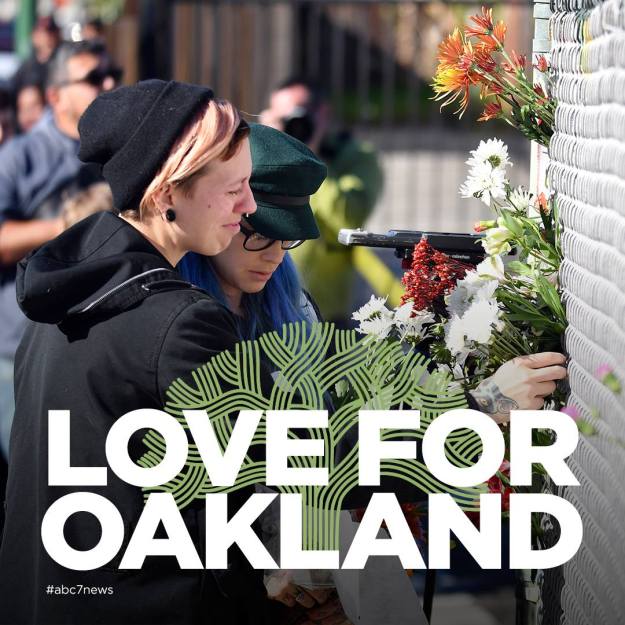
I’m so moved and saddened by the lives taken in Ghost Ship fire Friday night. When I first heard the story, I understood exactly what it was, because myself and many of my friends have attended gatherings like these many times around the Bay Area. They are exuberant, liberating, creative, inspiring and energizing events for the underground artistic community. To me, they are the heartbeat of the Bay Area, and communities everywhere. I’ve personally been inspired musically by attending these events.
But I wasn’t ready to start seeing the faces and hearing the back stories of the people that perished. I feel rocked to my core this morning; helpless and grieving for the young lives lost. To me, the artists, writers, performers and musicians of this world are hugely important and VITAL – especially as the world is becoming more conservative and protectionist. The world desperately needed to hear more from these brilliant kids, who had their whole lives in front of them.
You can read some of their stories here.
What can be said? What can be done other than to grieve? There is something each of us can do for the ones we lost. We can speak up. We can get disciplined and get to work. We can express ourselves. And we can DO OUR ART. I’m picking up my guitar today in honor of them.
We can learn a lot from other cultures and people different from our own. I pray that we all remain open to understanding our neighbors, and protecting their right to worship the Great Mystery in their own way.
We are one sisterhood and brotherhood on this planet.

“Yesterday my husband and i attended a football game, it was Duhur time and we needed to pray. Finding a place to pray at a football stadium is tough, but we managed to find an empty corner. I was a bit nervous to pray because it wasn’t private at all, particularly in front of everyone, maybe i’m silly but i’m always paranoid i will get attacked while focused in prayer. My husband started praying and i get approached by stadium security. I thought in my head, here comes this guy, he’s gonna escort me out and tell us we can’t do this here. I was wrong, he came up to me and said “i am going to stand here and guard you guys to make sure nobody gives you any problems, go ahead and pray.” He allowed us to pray and stood in front guarding us to make sure we are safe. When i finished he came up to us shook our hands and told us to enjoy the game. SubahanAllah, an amazing experience i will never forget.”
#Muslims_Everyday
By: Samantha from Boston, Massachusetts in the United States

It’s a VERY witchy night tonight. April 30th is a huge traditional celebration in many cultures throughout the world. It occurs six months from Halloween, and has the same flavor – but with a view of celebrating Spring.
Halloween is when the veil between our world and the spirit world is at it’s thinnest and it’s easy to see the returning spirits of the Mighty Dead. On Walpurgis Night the world’s are farthest apart.
Most cultures mark these ancient farming celebrations with fire, sex and odes to nature. Spring is about fertility – for ourselves, our animals and our fields. I view Walpurgis Night and Halloween as times to mark the ecstatic energy of life. That we are all here on this planet as part of it, and in tune with it. Celebrate. Face your fears and jump a fire.
The wildest, witchiest celebrations are in Germany (from what I’ve been told) and I would LOVE to see it someday. If you have any further information or images please share them in the comments below! Happy May Eve!
Here’s more info: https://en.wikipedia.org/wiki/Walpurgis_Night

 elizabeth rose psychic and tarot